Göttingen: Experience Libraries & Literary Houses
Göttingen 2026/27: Libraries & Literary Houses – Culture for the Ear & Eye (Preview of Upcoming Events)
7 min readLaura Müller
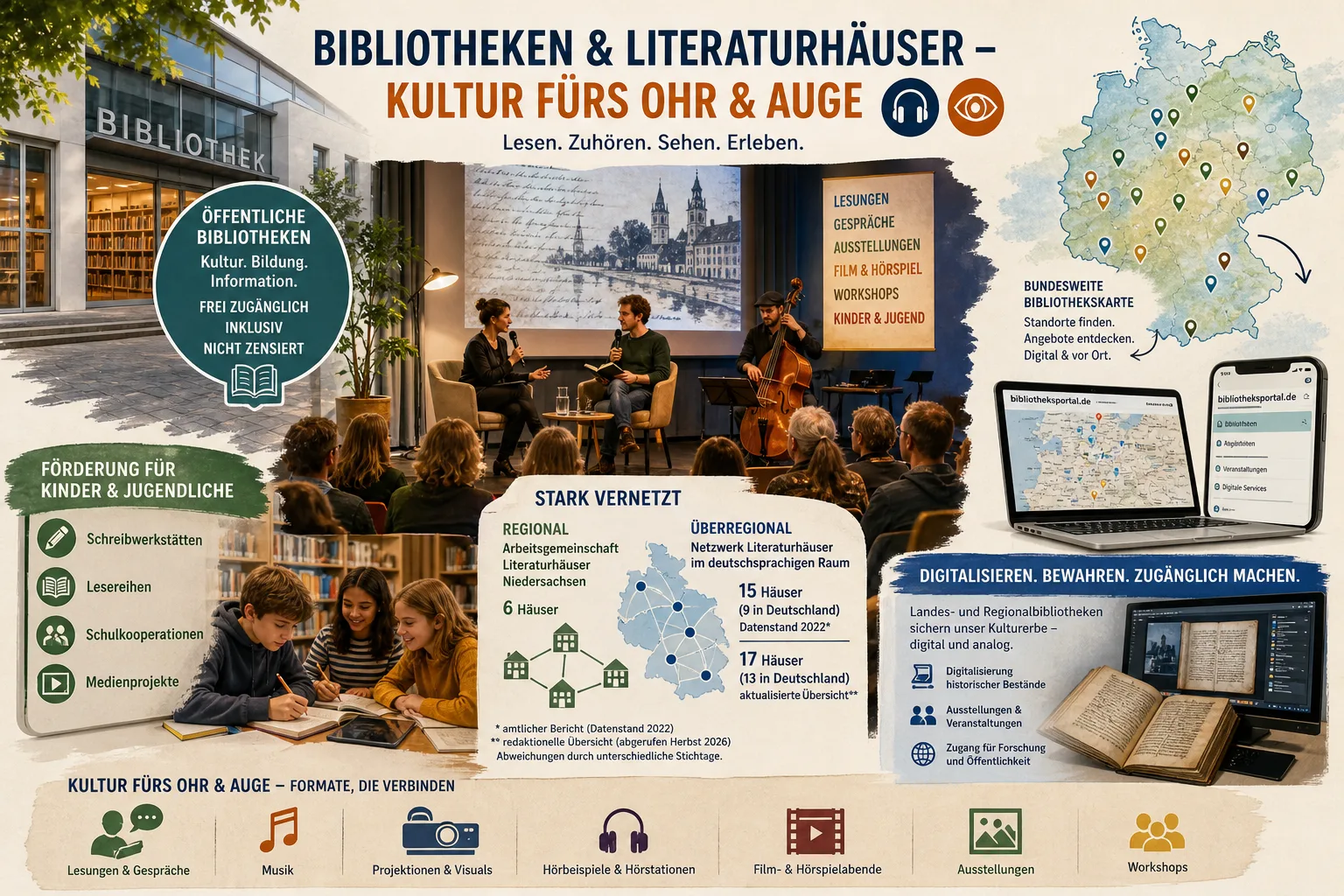
What does a city sound like when you not only read it, but also hear and see it? In Göttingen, libraries and literary houses will once again serve as cultural venues in the upcoming winter semester 2026/27 and in 2027: with readings, discussions, exhibitions, audio formats, and digital program items that place literature as an experience for the ear and eye at the center.
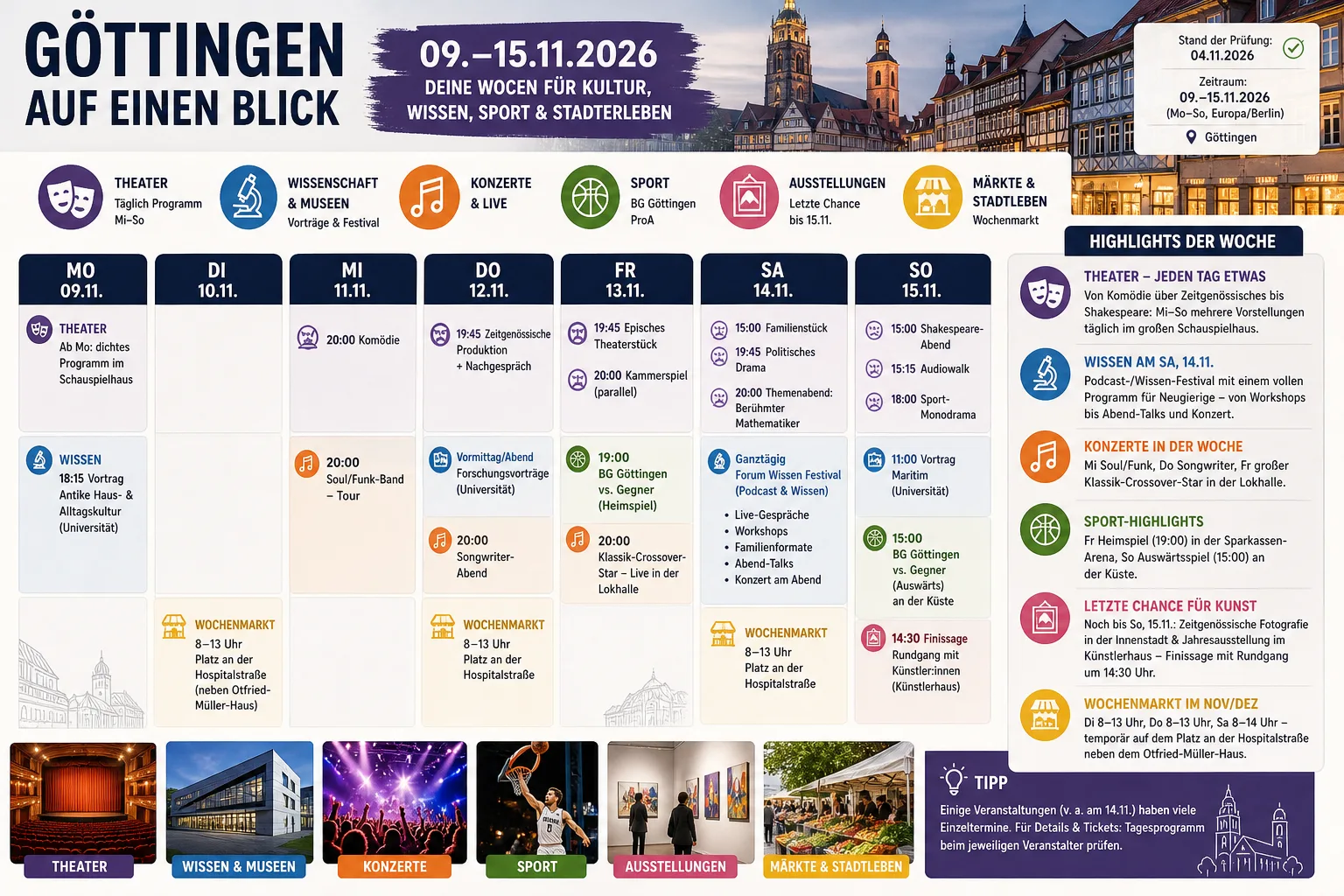
Note on up-to-dateness: Specific dates and ticket information will be published by the respective organizing venues. This article helps you to classify upcoming formats and plan your visit in a targeted manner.
Why Libraries and Literary Houses Will Remain Especially Relevant in 2026/27
For the next season, libraries and literary houses in Göttingen will continue to combine two roles: On the one hand, they will be low-threshold places for education and information – and on the other hand, stages where literature can take place as a public event. It is precisely from this combination that formats arise that reach people with very different reading habits: from silent reading to staged readings with sound, image, and conversation.
Guiding this is an internationally widespread understanding of public libraries as freely accessible, inclusive institutions that are intended to enable participation. For visitors, this means looking ahead: Programs will likely be designed to appeal to both regular guests and newcomers.
Outlook: What Program Items You Can Expect in Public Libraries
In the upcoming program cycle, public libraries in Göttingen will typically serve several tracks that can be well combined – for example, an afternoon with media lending and children's offerings plus an evening event with a lecture or reading. Typical, future recurring formats will likely be:
- Reading aloud and family formats (e.g. picture book cinema, themed reading hours, activities around storytelling).
- Evening events (readings, discussions, small series with focus topics).
- In-house exhibitions (often with accompanying introductory dates or short tours).
- Digital access (e-books, audiobooks, digital catalogs; sometimes accompanied by introductions or consultation hours).
If you are new to this, it will prove useful as a planning step: first check the event program, then borrow suitable media (book, audiobook, e-book) – this way, you can delve into a topic over weeks without a single event having to carry everything.
Outlook: Literary Houses as a Stage – Readings, Discussions, Curated Series
Literary houses will also be particularly strong in 2026/27 where curated dramaturgy is required: moderated discussions, thematic series, special voices, and experimental formats. For the upcoming period, it can be expected that programs will again be developed along focal points – such as social debates, new literary voices, translations, or genre-related perspectives.
Among the formats you will frequently encounter in the next season are:
- Readings with moderation (with space for questions from the audience).
- Panel discussions (literature in the context of science, politics, everyday life).
- Workshop formats (writing, performing, text work; often in several sessions).
- Accompanying programs to exhibitions (e.g. discussion evenings, audio or film impulses).
For reliable orientation, literary houses in the German-speaking world will continue to be visible in networks, which will facilitate the exchange of guests, series ideas, and cooperations – a good prerequisite for ensuring that supraregional voices will also appear in future programs in Göttingen.
Culture for the Ear & Eye: Which Multisensory Formats Are Likely to Become More Frequent in 2027
The trend towards multisensory literary mediation is expected to intensify further in 2027: Literature will not only be read, but increasingly staged. In practice, you can expect (depending on the venue and series) more hybrid forms in which voice, image, and sound work together:
- Readings with music or sound design to intensify the atmosphere.
- Listening stations in exhibitions, supplemented by short explanations (e.g. author voices, archive recordings, interviews).
- Projections and image series (illustration, photography, documentary material) that expand text passages.
- Short audio or video impulses before or after the discussion to lower entry barriers.
If you rarely attend readings, these formats in particular will offer an accessible entry point: You can first listen and watch – and then continue with books, backgrounds, and topics.
Digitization & Access: What Visitors Will Be Able to Use Practically in the Coming Season
Parallel to events, digital access to literature and cultural offerings will remain a crucial component in 2026/27. For users, two usage paths will be especially relevant:
- Digital library offerings (research, lending, audio and reading media) as a supplement to on-site visits.
- Digital collections and portals (e.g. for newspapers, historical prints, or thematic online exhibitions) that enable further exploration after a lecture or reading.
For your planning, this means: In the future, you will often not have to decide between "analog" and "digital" – instead, you can take an event evening as a starting point and then continue working with digital offerings.
Children & Adolescents: Which Offerings Will Likely Be in Focus in 2026/27
In the coming year, children's and youth formats will continue to be among the most important program areas, as they can link reading, media literacy, and cultural participation at an early stage. A mix of regular and project-based offerings is particularly likely:
- Reading aloud & storytelling for younger children, often as recurring dates.
- Writing and creative workshops (short stories, poetry, radio play ideas), sometimes as multi-part courses.
- Media projects that combine text with audio, video, or illustration – this is where "culture for the ear & eye" becomes especially tangible.
- Cooperations with schools in which class formats and thematic series are planned.
If you are planning as a family or school group, it will be advisable to check the program sections of the venues early, as recurring series can often be booked out quickly.
Visit Planning 2026/27: How to Find Suitable Dates (Without Stress)
To ensure your visit to Göttingen's libraries or literary houses is truly successful in the coming season, this approach will prove effective:
- Check the venues' program calendars (monthly overview or newsletter) and search for keywords: "reading", "exhibition", "listening station", "workshop", "family".
- Choose a format that matches your own attention span: short talk, classic reading, or longer workshop.
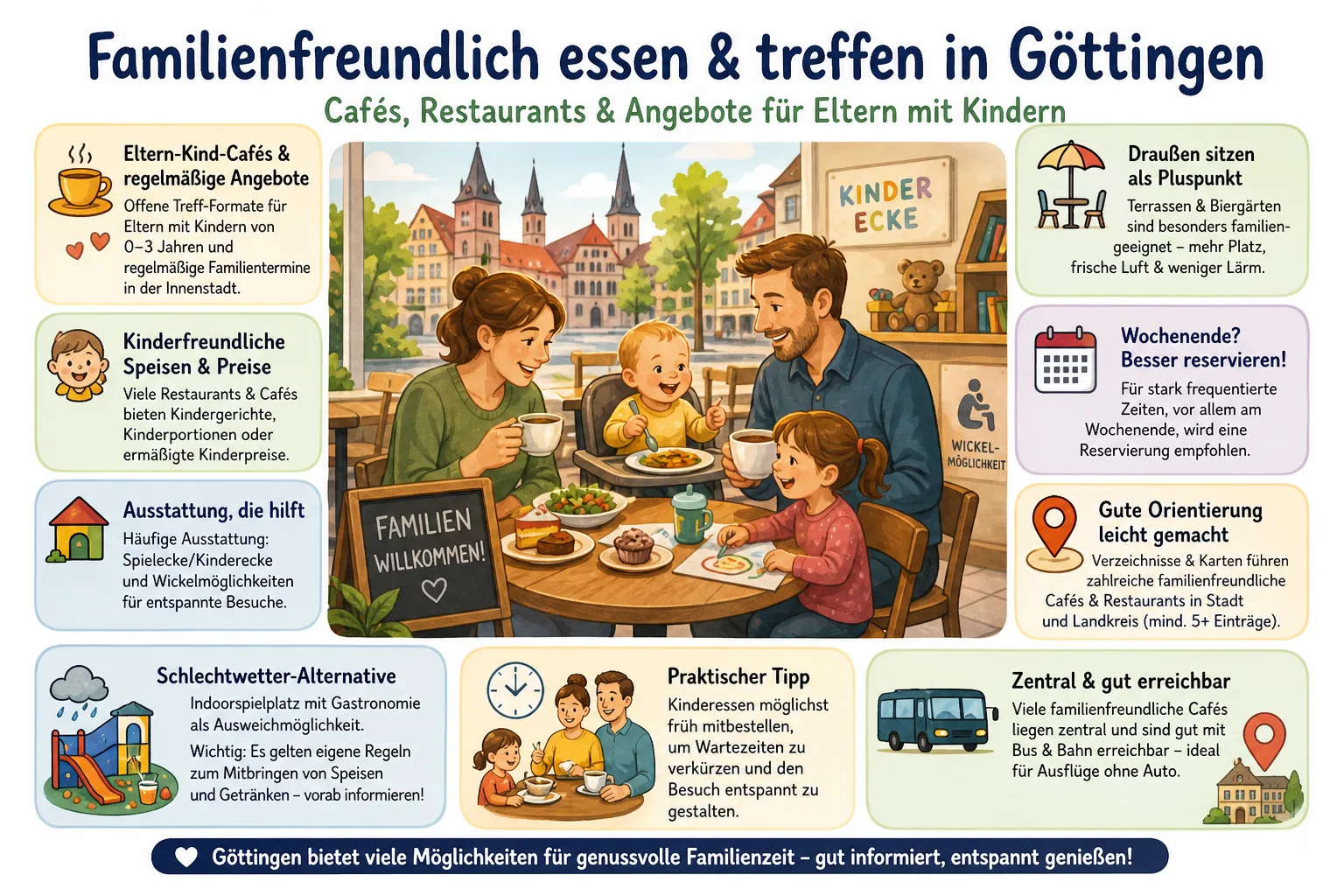
- Clarify accessibility and service information in advance (admission, seating, accompaniment, possibly audio support), if offered.
- Plan follow-up: borrow media or use digital materials to deepen content.
This way, a single evening becomes a cultural "thread" that can continue over weeks – across books, audio formats, discussions, and exhibitions.
Conclusion: Göttingen 2026/27 – Reading, Listening, Seeing – Looking Ahead
Looking ahead to 2026/27 and 2027, it is becoming clear: Libraries and literary houses in Göttingen will continue to be places where literature does not only take place in books. Readings, discussions, exhibitions, audio impulses, and digital access will likely intertwine even more closely. Those seeking culture for the ear & eye will be especially well advised in the coming season to review programs early and combine formats – on-site and digitally.