Discover Regional Cuisine & Slow Food in Göttingen
Regional Cuisine & Slow Food in Göttingen: Culinary Plans and Experiences for the Coming Seasons
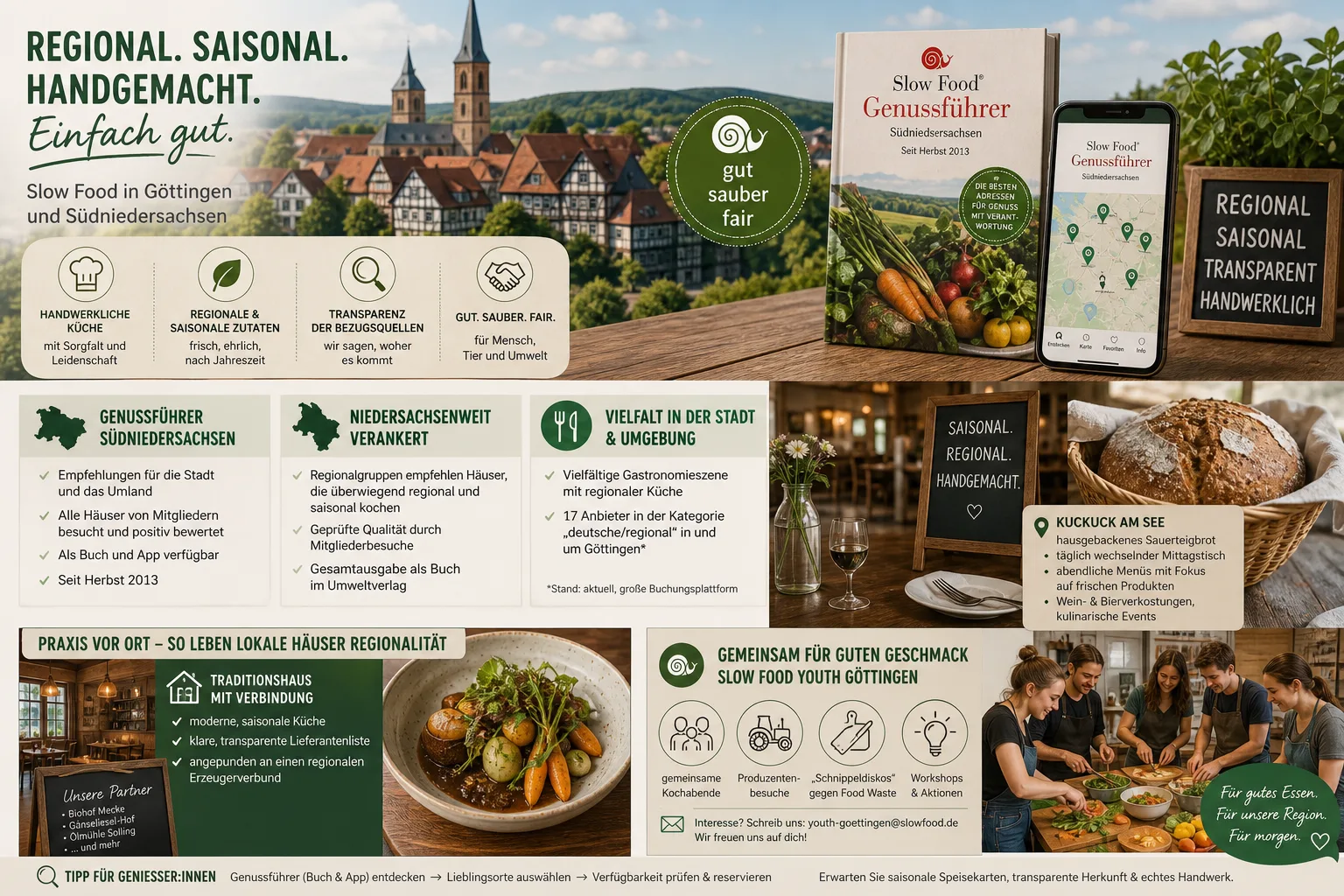
If you want to explore Göttingen’s culinary scene in the coming months, the city is perfect to get to know “through the plate”: with dishes made from regional ingredients, seasonal menus, and formats that focus on mindful cooking. This article will help you plan future visits, restaurant evenings, and culinary activities so that they align with the Slow Food principles: good, clean, and fair.
What Slow Food Practically Means for Your Upcoming Visits to Göttingen
Slow Food is above all an attitude for your future visits to Göttingen: you make sure that food not only tastes good, but is also traceable, seasonal, and fair. In practice, this means: plan more deliberately, ask about origins, and choose restaurants or formats that visibly focus on regional ingredients.
If you are consciously out and about in the future, the difference between merely “appearing regional” and truly regional is often quickly apparent. The following sections will help you with this.
Seasonal Calendar: Which Regional Focuses You Can Expect in the Future
If you structure your next stays in Göttingen by season, regional cuisine becomes much easier. The following examples are deliberately kept general (since daily offerings vary by establishment) and will help you plan upcoming weekends and restaurant evenings.
Late Summer and Early Autumn (August to October)
- Vegetables & Fruit: Tomatoes, cucumbers, zucchini, beans, berries, plums, first apples.
- Typical plate ideas for your planning: colorful vegetable plates, regional salads, fruit desserts, first hearty dishes with pumpkin and mushrooms (depending on the season).
Autumn and Winter (November to February)
- Vegetables & Pantry: Root vegetables, cabbage, stored apples, legumes as well as preserves and fermented foods.
- Typical plate ideas for your planning: stews, braised dishes, hearty soups, regional snack plates, winter desserts with compote.
Spring (March to May)
- Kitchen restart: first herbs, spring vegetables, and depending on the weather, increasingly fresh, light components.
- Typical plate ideas for your planning: herb soups, fresh vegetable dishes, seasonal lunch menus, desserts with early fruits (depending on availability).
Early Summer (June to July)
- Light season: berries, fresh vegetables, herbs, summery baked goods.
- Typical plate ideas for your planning: light menus, regional vegetable variety, summer cakes, bread and butter variations with regional craftsmanship.
Planning tip: When making a reservation in the future, ask in advance about the daily menu or the seasonal focus. Establishments that really cook seasonally can often tell you by phone or email what will be featured in the coming days.
The Slow Food Guide as a Compass (for Your Next Planning)
For future visits, the Slow Food Guide is one of the most useful tools if you want to specifically look for establishments that take Slow Food criteria seriously. Use it as a filter to quickly find suitable addresses for Göttingen and the surrounding area.
How to Use the Guide for Upcoming Restaurant Visits
- Set your goal: Do you want to plan a seasonal dinner, a lunch stop, or a country outing to the surrounding area?
- Compare addresses: Check descriptions for craftsmanship, regionality, and transparency.
- Prepare questions: Note 1–2 short follow-up questions, e.g., “Which regional products will be featured in the coming weeks?”
- Check for updates: Before your visit, check the website or reservation pages for opening hours and seasonal promotions.
This way you avoid disappointment and increase the chance that your next visit really matches what you understand by regional cuisine.
How to Recognize Genuine Regionality in the Future
“Regional” quickly appears on menus. If you want to make the best possible choices in the future, these signals will help (none of them alone is proof; in combination they become more meaningful):
- Specific origin instead of buzzwords: It is clear where products come from (e.g., farms, bakeries, cheese dairies, mills named by name).
- Seasonal changes: The menu visibly changes over the months; there are daily specials, weekly menus, or seasonal menus.
- Craftsmanship clues: House bread, own stocks/sauces, ferments, preserves, or clear statements about “no convenience products.”
- Transparent handling of exceptions: Good establishments openly explain when something is deliberately not regional (e.g., coffee, chocolate) and how they pay attention to quality/fairness there.
- Willingness to engage in dialogue: Questions about origin or processing are answered in a friendly and concrete manner.
Phrase you can use at the table in the future: “Which ingredients from the region are especially good right now, and which dish showcases that best?”
Concrete Suggestions for Future Culinary Plans in Göttingen
Plan A: The Seasonal Evening (for Your Next Weekend)
You choose a restaurant that works with a daily menu and deliberately book so that you can experience seasonal cuisine:
- In advance: Ask about the daily menu, look for seasonal hints, confirm your reservation.
- On site: Choose a dish that clearly tastes of the season (vegetable, grain, or mushroom focus depending on the season).
- After the meal: Note what seemed particularly regional (e.g., bread, vegetable side, dessert) – this will help you on your next visit.
Plan B: Combine City & Surroundings (for a Future Day Trip)
If you plan time for a little country outing in the future, regional cuisine can be especially well “experienced”:
- Morning: Visit a market or the city center (depending on the day of the week and what’s available).
- Lunch: Light lunch with a seasonal focus.
- Afternoon: Walk on the outskirts or in the countryside.
- Evening: Menu or plate dish that puts regional products center stage.
This creates a harmonious daily routine where food, landscape, and cityscape fit together.
Plan C: “Slow Food at Home” as a Continuation After the Visit
If you want to cook more regionally at home after a visit to Göttingen, start small:
- 1 seasonal vegetable per week as a fixed point (e.g., cabbage in winter, tomatoes in late summer).
- Expand a basic recipe: Soup, roasted vegetables, or stew, each adapted to what is currently available.
- Plan leftover days: Deliberate leftover days (e.g., combining bread, vegetables, legumes) so that “regional” also remains economical.
Community and Youth Formats: How You Could Participate in the Future
If you want to do more than just eat out in the future, community formats can be a good addition. In many cities, cooking evenings, workshops, or food appreciation events are organized (often under terms like “chopping disco”). Such formats are especially suitable if you:
- want to learn practically how seasonal cooking works,
- want to meet people from the region who connect producers, craftsmanship, and cuisine,
- want to contribute concretely (e.g., by cooking together with rescued food).
How to plan your participation for the coming months: Check the official channels (websites/newsletters) of relevant initiatives in Göttingen early and register in good time, as places at cooking events are often limited.
Sources
- Slow Food International – Our philosophy (“Good, Clean and Fair”) — Basic principles of the Slow Food movement (accessed 2026-08-12)
- Slow Food Deutschland e. V. — Background on the organization and regional work (accessed 2026-08-12)
- Göttingen Tourism — Guidance for planning future stays in Göttingen (accessed 2026-08-12)