Time Travel through Göttingen: Old Photos, Stories & People
Time Travel through Göttingen: Upcoming Tours, Photo Experiences & Places of Remembrance
In the coming months, Göttingen can be explored in particularly impressive ways "through time": with planned city tours, publicly announced exhibitions, film and photo evenings, as well as places where remembrance culture is consciously and respectfully shaped. This article helps you find future offerings, combine them sensibly, and use reputable sources in the process.
2) Old photos & digital collections: What you can discover in the future
Many future time travel formats in Göttingen revolve around historical photographs, private photo collections, and city history archives. Typical offerings you may find in announcements:
- Photo lectures & moderated photo evenings (e.g. "Göttingen in Transition", "Everyday Life Then and Now"), often with Q&A sessions.
- Curated online galleries that you can use as a "virtual tour" before your visit.
- Participatory formats where citizens contribute photos or identify motifs (often as project weeks, action days, or accompanying exhibitions).
How to get more out of future photo events:
- Note down 3–5 places you want to recognize in photos beforehand (e.g. market, station area, ramparts, neighborhoods around the city center).
- Bring your own photos as a copy or digitally (originals only if the organizer can handle them safely), if explicitly requested.
- Ask about image rights and usage: reputable projects explain transparently if and how submitted photos will be published.
3) City tours as a scenic time journey: What to look out for in upcoming dates
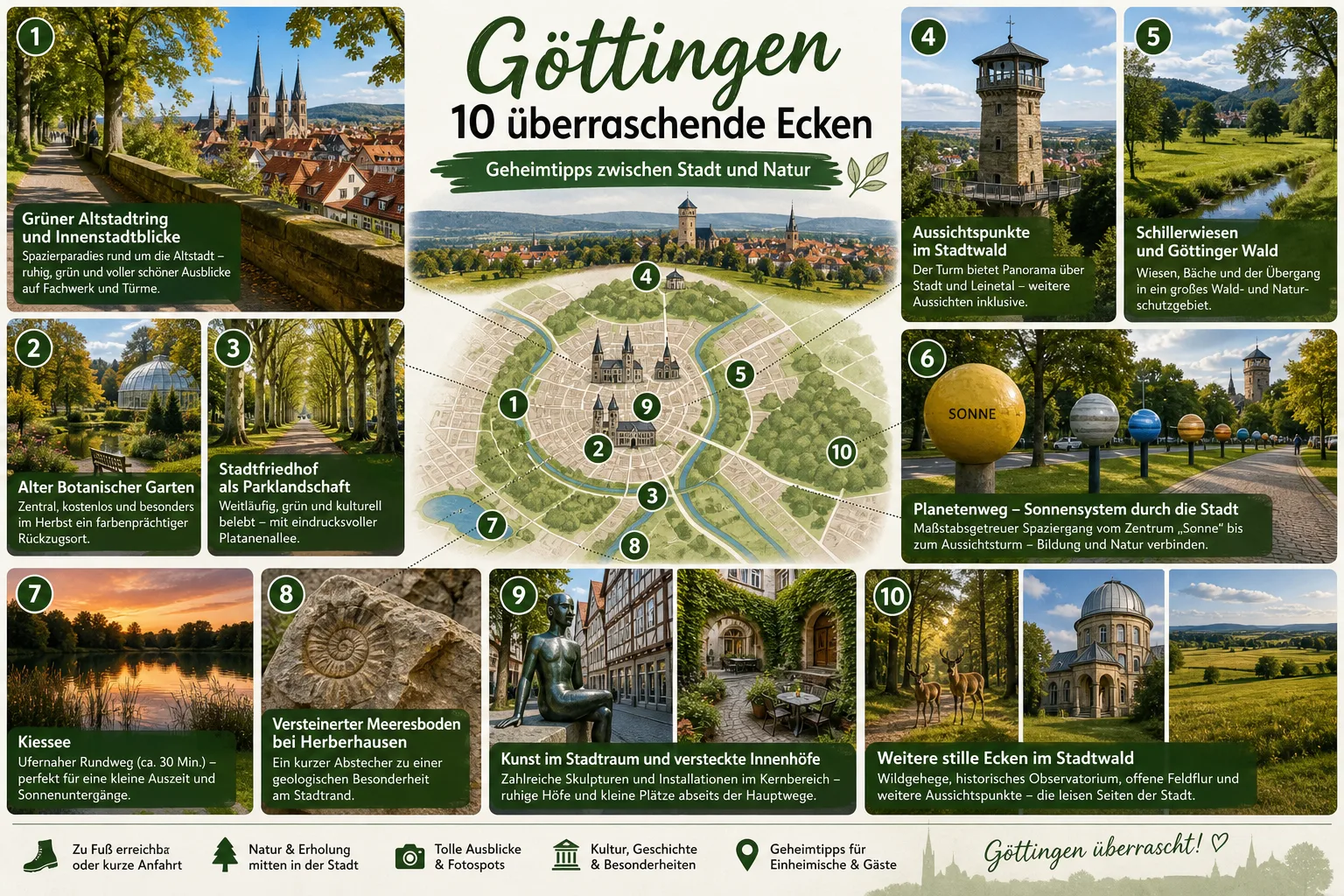
For a time journey "on the street", thematic tours are particularly suitable, making the cityscape tangible through roles, language, or everyday details. For upcoming dates, pay attention to the following points:
- Concept & source reference: Good providers explain what their presentation is based on (e.g. city history, archives, eyewitness accounts) and clearly distinguish between proven facts and scenic representation.
- Route & duration: Check start/end point, route length, and breaks. Especially in the old town, short routes can offer a lot of content.
- Language & comprehensibility: Dialect or role-based tours are particularly atmospheric but should also be understandable for non-locals.
- Accessibility: Cobblestones, stairs, and narrow passages are common in historic city centers; good announcements mention alternatives or limitations.
4) Remembrance culture (Nazi era, forced labor): Upcoming formats – and respectful participation
An important part of a responsible "time journey" are offerings dealing with the Nazi era, persecution, forced labor, and urban responsibility. In the coming months, the following may be announced, for example:
- Memorial walks with historical context on site (city center, station area, former work and accommodation sites – depending on the concept).
- Lectures, readings, or panels in cooperation with museums, archives, educational institutions, or remembrance initiatives.
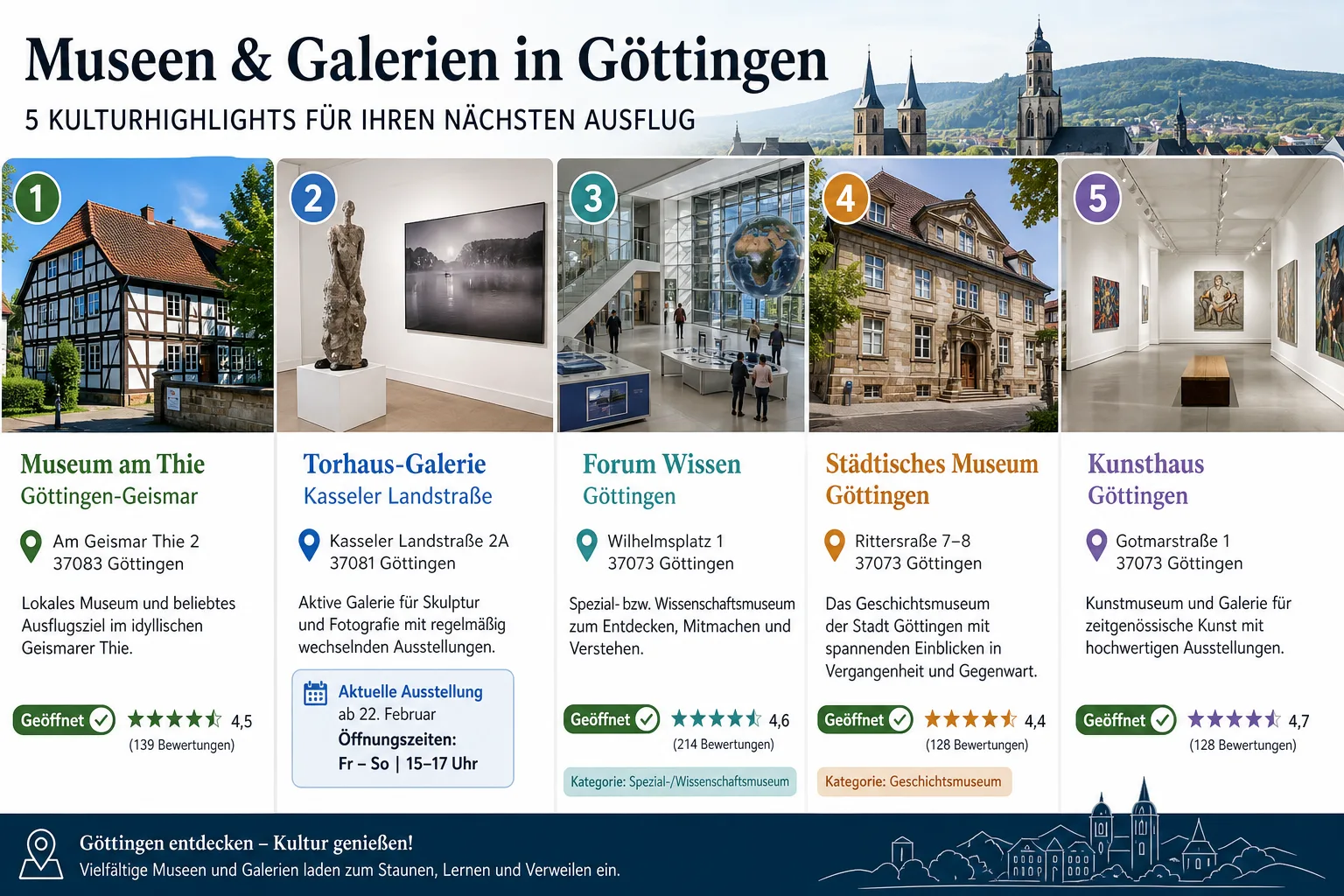
- Exhibitions that explore local biographies, documents, photos, and maps.
How to participate respectfully:
- Expect distressing content and plan time for reflection afterwards.
- Only take photos where it is explicitly allowed—especially with names, plaques, graves, or personal documents.
- If participating with children: Choose age-appropriate formats and read the content description in advance.
If you are unsure which offering is appropriate, look for institutions with clear sponsorship, transparent content, and traceable source work (e.g. city archive, museums, established educational and remembrance institutions).
5) Industrial culture & working worlds: Exhibitions, lectures, and company history
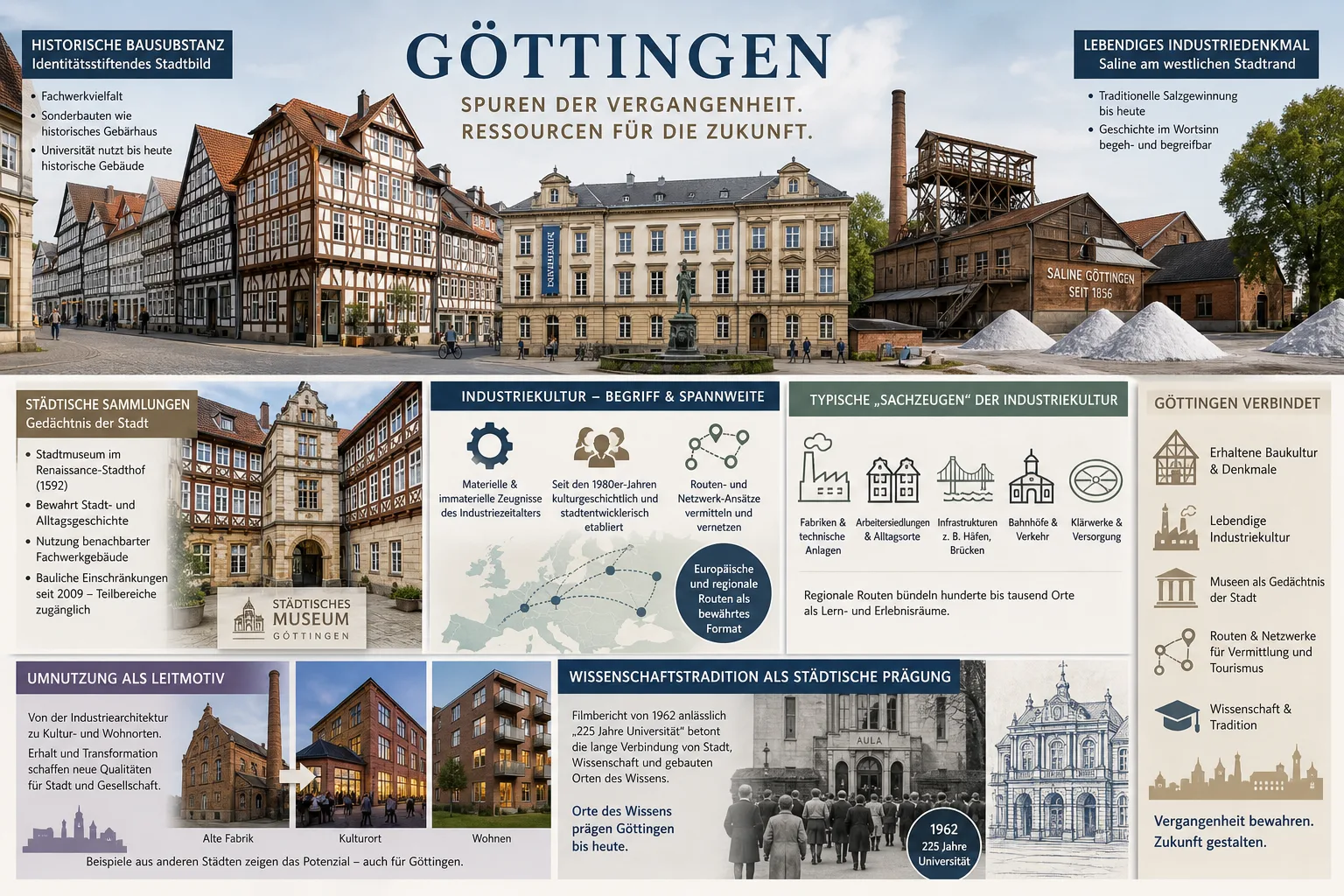
In addition to old town and remembrance topics, Göttingen regularly announces formats on work and industrial culture—from the history of technology to research and the everyday worlds of employees. Depending on program planning, the following are particularly plausible for the coming months:
- Exhibition stations on production, transport, or science history (often in museums or as temporary presentations).
- Discussion evenings with contemporary witnesses from companies, administration, university, or trades (often moderated).
- Neighborhood-based tours showing how workplaces influence residential areas, routes, and infrastructure.
For greater insight, it is worthwhile to choose offerings that do not just tell a "success story" but also classify working conditions, change, conflicts, and social consequences.
6) Sample program for your next visit (flexible, without fixed dates)
This program is designed so you can adapt it to future dates without being tied to a specific day:
Option A: Focus on Old Town & Photos (1 day)
- Morning: Visit an announced exhibition or a public collection offering (museum/archive format).
- Midday: Short old town walk with 3 photo stops (e.g. squares, axes, neighborhoods) that appear in the exhibition context.
- Afternoon/Evening: Thematic or scenic city tour (depending on schedule).
Option B: Focus on Remembrance & Context (half day to 1 day)
- Start: Participation in a memorial walk or lecture.
- Afterwards: Quiet exhibition visit or document-based format (if offered) for further exploration.
- Conclusion: Plan time for reflection (e.g. quiet route back, notes, discussion in a small group).
7) Checklist: How to check dates, reliability, and accessibility
- Up-to-dateness: Is there a clearly future date in the official calendar or on the organizer's website?
- Organizer: Is it clear who is responsible (imprint/institution/contact person)?
- Content: Is there a factual description (topic, route, duration, source reference)?
- Tickets/registration: Is it transparently explained whether registration is required and how cancellations are handled?
- Accessibility: Are there notes on path conditions, seating breaks, audibility, language, or alternative routes?
- Data protection for participatory projects: Is it explained how submissions (photos/memories) are processed and published?
Sources & further links
- City of Göttingen (official website) — Event information, municipal information (accessed 2026-04-15)
- Tourism & Marketing Göttingen GmbH — Information on city tours, visit planning, and current programs (accessed 2026-04-15)
- City Archive Göttingen — Information on archive work, collections, possibly public dates (accessed 2026-04-15)
- Georg-August University Göttingen — Institutional information; depending on the program, also information on public lectures/events (accessed 2026-04-15)
- German Digital Library — Research opportunity for digitized cultural and archival holdings (accessed 2026-04-15)