
Charlotte Perkins Gilman
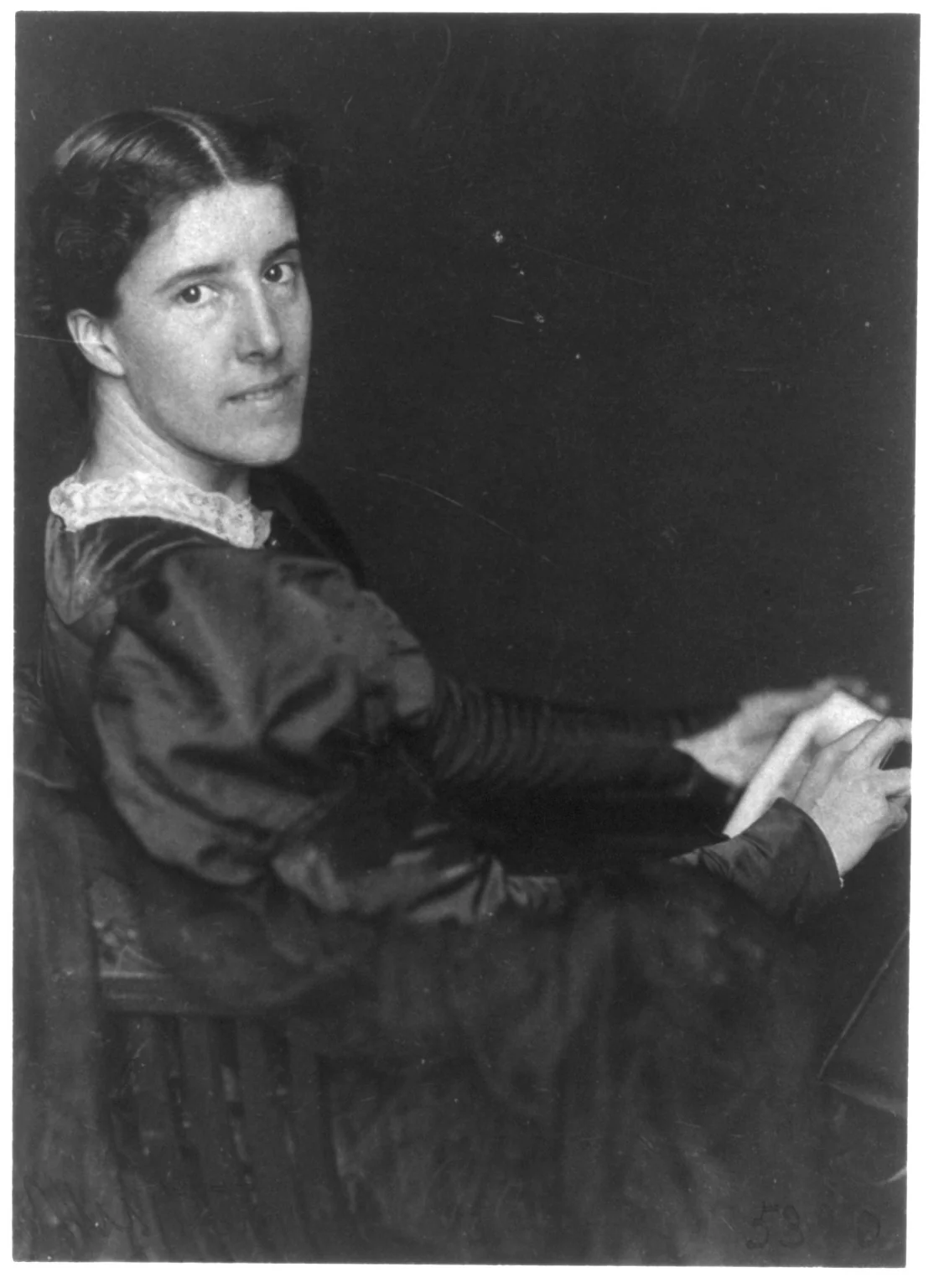
Image from Wikipedia
Image from Wikipedia
Charlotte Perkins Gilman – the great voice of feminist thought
An author who reimagined literature, society, and women's rights
Charlotte Perkins Gilman is among the most influential American writers and feminists of the late 19th and early 20th centuries. Born on July 3, 1860, in Hartford, Connecticut, and passed away on August 17, 1935, in Pasadena, she combined literary power with social analysis and became a leading theorist of the women's movement in the United States. Her 1892 narrative The Yellow Wallpaper made her well-known beyond literature. ([britannica.com](https://www.britannica.com/biography/Charlotte-Perkins-Gilman?utm_source=openai))
Biography: Background, education, and intellectual empowerment
Charlotte Anna Perkins grew up at a time when female education and social self-determination were severely limited. Nevertheless, she pursued self-education and utilized libraries to acquire knowledge in physics, literature, history, and ancient civilizations. This intellectual independence became a central motif of her entire work and shaped her later role as a sharp-thinking essayist, speaker, and journalist. ([en.wikipedia.org](https://en.wikipedia.org/wiki/Charlotte_Perkins_Gilman?utm_source=openai))
The breakthrough with “The Yellow Wallpaper”
Gilman achieved her literary breakthrough in 1892 with the autobiographically influenced narrative The Yellow Wallpaper, which tells the story of a young wife's mental decline under the control of patriarchal care. The story is now considered a key text of feminist literature because it radically highlights the connection between domestic confinement, medical guardianship, and the loss of female autonomy. Later research describes its reception as multifaceted: from a misunderstood horror story to a canonical text of feminist critique. ([britannica.com](https://www.britannica.com/biography/Charlotte-Perkins-Gilman?utm_source=openai))
Career as a speaker, essayist, and social theorist
Gilman was much more than a successful storyteller. Britannica refers to her as a feminist, lecturer, writer, and editor, as well as a leading theorist of the women's movement in the USA. Her lecture series and studies received significant attention, and she was regarded as a compelling speaker who engaged her audiences with clarity, energy, and argumentative strength. This combination of linguistic precision and public impact made her an authority of progressive thought. ([britannica.com](https://www.britannica.com/biography/Charlotte-Perkins-Gilman?utm_source=openai))
Important works and literary development
Among Gilman's most important writings are Women and Economics (1898), The Home: Its Work and Influence (1903), and Human Work (1904). She later solidified her reputation with the utopian novel Herland and other texts, where she reexamined gender roles, division of labor, and social order. As an editor, she also set standards: with The Forerunner, she produced a monthly magazine from 1909 to 1916, in which she wrote all the content herself – from essays and critiques to stories, poems, and six serialized novels. ([britannica.com](https://www.britannica.com/biography/Charlotte-Perkins-Gilman?utm_source=openai))
Style, themes, and intellectual fingerprint
Gilman's writing combines social diagnosis with clear, argumentative prose and utopian thinking. Her texts revolve around the economy of labor, the political significance of the home, female self-determination, and the reconfiguration of social norms. Research literature emphasizes that her theoretical concepts for gender analysis remain relevant in many respects, even though some positions must be critically examined today. This tension between visionary progress and historical limitations gives her work its lasting relevance. ([journal-redescriptions.org](https://journal-redescriptions.org/articles/10.33134/rds.432?utm_source=openai))
Critical reception and cultural influence
Gilman's reception is closely linked to the rediscovery of feminist literature in the 1970s. Particularly, The Yellow Wallpaper became a central point of reference in literary studies, as the text sharpens the focus on marriage, medicine, and power structures. At the same time, research also reveals problematic aspects of her thinking, such as racist and eugenic passages in some writings that are now openly addressed. Therefore, her cultural influence does not rest on mythical inviolability but on the productive, often contradictory intensity of her work. ([cambridge.org](https://www.cambridge.org/core/journals/pmla/article/but-one-expects-that-charlotte-perkins-gilmans-the-yellow-wallpaper-and-the-shifting-light-of-scholarship/3EF1E59D9FE5292DE91EDE6E5FB8A1AF?utm_source=openai))
Current relevance: Why Charlotte Perkins Gilman is still read today
Even without new publications, Gilman remains a vibrant reference point in the present. Her texts are still intensively discussed in research, teaching, and cultural criticism debates because they articulate fundamental questions about gender, labor, public life, and psychological stress with rare sharpness. Modern studies emphasize that her writings remain both historically significant and analytically applicable – particularly where feminist theory examines social structures, care work, and power relations. ([sciedupress.com](https://www.sciedupress.com/journal/index.php/wjel/article/view/28777?utm_source=openai))
Conclusion: An author with enduring explosive power
Charlotte Perkins Gilman remains intriguing because she understood literature not merely as storytelling but as a tool for social change. Her career unites narrative precision, theoretical rigor, and public impact in an extraordinary way. Those who read her texts encounter an author who has shaped feminist literary history and has fundamentally altered perspectives on power, domestic order, and female self-determination. While a live performance is no longer possible today, her writings continue to resonate with remarkable presence in the minds of readers. ([britannica.com](https://www.britannica.com/biography/Charlotte-Perkins-Gilman?utm_source=openai))
Official channels of Charlotte Perkins Gilman:
- Instagram: no official profile found
- Facebook: no official profile found
- YouTube: no official profile found
- Spotify: no official profile found
- TikTok: no official profile found
Sources:
- Encyclopaedia Britannica – Charlotte Perkins Gilman
- Wikipedia – Charlotte Perkins Gilman
- Cambridge Core / PMLA – The Yellow Wallpaper and the Shifting Light of Scholarship
- Oxford Academic – The Feminism of Charlotte Perkins Gilman: Sexualities, Histories, Progressivism
- Redescriptions – Profession, Emotion, and Hope: Charlotte Perkins Gilman and the Origins of the Sociology of Gender
- World Journal of English Language – Genre, Gender, and the Politics of Reception in The Yellow Wallpaper
- Lewis University – Windows Fine Arts Magazine
- Wikipedia: Image and text source