
Elke Schmitter
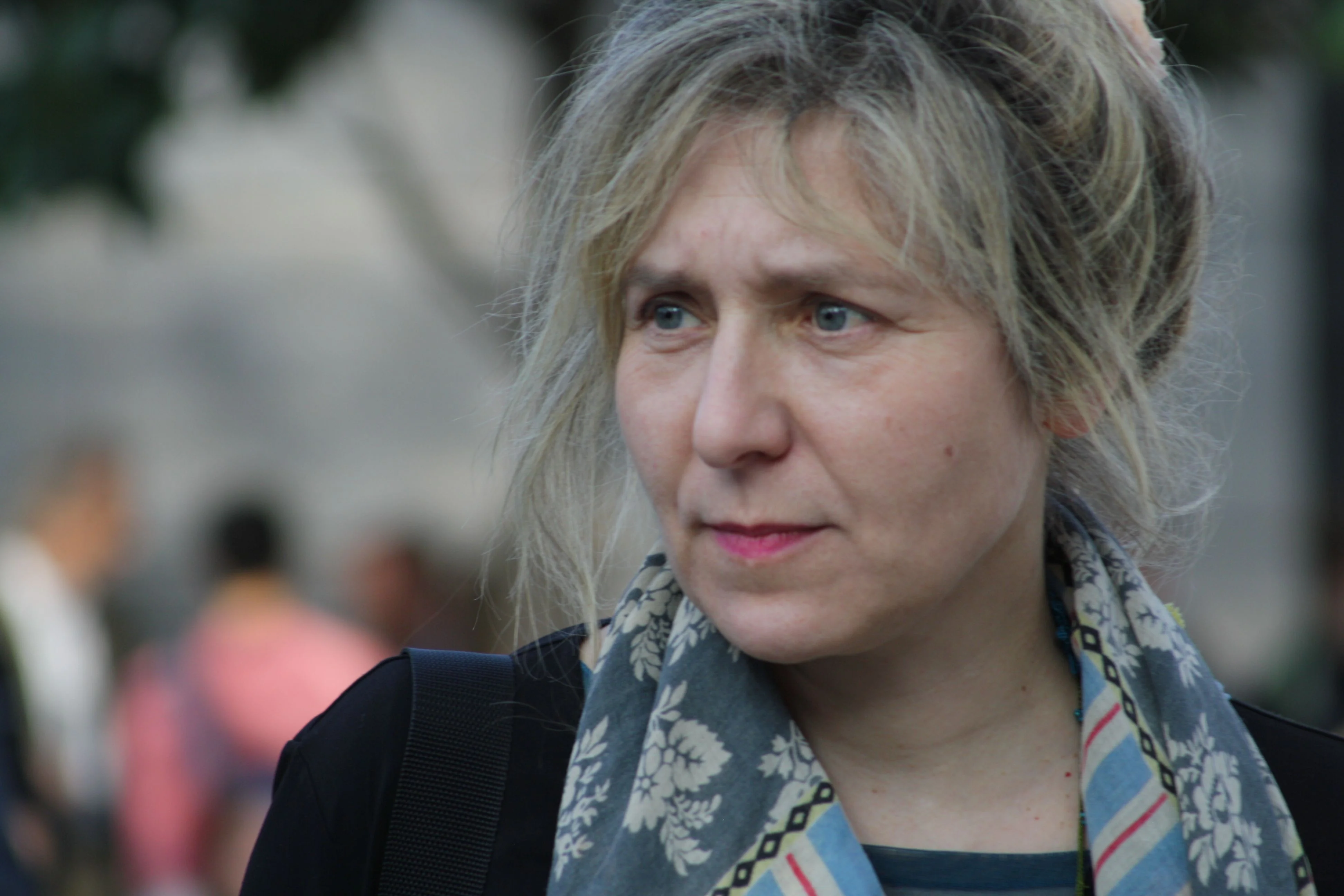
Image from Wikipedia
Image from Wikipedia
Elke Schmitter: The Precise Observer Between Journalism, Literature, and Intellectual Present
An Author with a Clear Stance and Literary Radiance
Elke Schmitter, born on January 25, 1961, in Krefeld, is one of the distinctive voices in contemporary German literature and cultural journalism. Her work combines journalistic sharpness with literary accuracy, emotional depth, and a keen sense of societal constellations. She gained initial recognition as a journalist and later became known as a poet, essayist, and novelist.
Her career embodies a rarely consistent double profile: critical editorial experience, journalistic authority, and literary independence. Schmitter not only wrote about culture; she shaped it with her own texts, taking as seriously the relationships, role models, and societal expectations as she does language, form, and tone. This very connection makes her name consistently intriguing to readers.
Biographical Beginnings: Philosophy, Cultural Journalism, and the Path to Literature
After studying philosophy in Munich, where she completed her Master's thesis in 1984, her path led directly into journalistic practice. She initially worked in a bookstore, wrote book reviews, and transitioned to the feuilleton of the tageszeitung in 1989 as an editor. From 1992 to 1994, she served as the editor-in-chief there, a position that visibly established her journalistic authority.
These years shaped an author who not only observes societal debates but understands them structurally. Schmitter early on navigated the intersections of culture, critique, and literary production. From this background emerged a body of work that connects intellectual precision with narrative sensibility.
The Literary Breakthrough and Thematic Signature
Already in 1982, her poetry collection Windschatten im Konjunktiv was published, an early indication of her stylistic sensitivity. In 1998, she followed up with the essay collection Und grüß mich nicht unter den Linden about Heinrich Heine, before reaching a broad readership with her novel Frau Sartoris in 2000. The book has been translated into more than 20 languages, establishing Schmitter as an international literary voice.
With Leichte Verfehlungen, she presented a sort of Berlin social panorama in 2002, working with fine irony and precise observations of milieu. Her texts often revolve around love, desire, social codes, and the friction between self-image and reality. The strength of her prose lies in the combination of analytical distance and psychological closeness.
Journalistic Authority and Editorial Experience
Schmitter's journalistic career lends her work a particular credibility. After her time at taz, she later worked at Die Zeit, Süddeutsche Zeitung, and finally at Der Spiegel, where she occasionally led the culture section. These stations not only demonstrate versatility but also the ability to precisely categorize complex cultural developments.
Her journalistic experience also shapes the literary language: concise, observant, pointed, and open to ambivalences. Those who read her texts recognize the school of the feuilleton as well as the freedom of literature. This precisely creates her unmistakable tone.
Work, Resonance, and Regional Significance
Schmitter's books have not only been read but have also been widely received and discussed. Frau Sartoris was an international success, while Leichte Verfehlungen solidified her status as an author with a keen sense for social atmospheres. The reception points to a writer who combines precise observations of everyday life with literary strength.
Later works included writings on the theme of love, such as Was Liebe mit uns macht. The connection between feeling, thought, and language remains a central motif of her oeuvre. Schmitter does not write ornamentally but condenses experiences into clear, often surprisingly bright insights.
Style: Analytical, Elegant, and Uncompromisingly Precise
Her style thrives on clarity, rhythm, and controlled intensity. Schmitter opts for precise observation rather than over-interpretation, for psychological nuances instead of superficial exaggeration. This gives her texts a subtle but lasting impact.
In her essays and novels, there is a keen sense for language as a medium of understanding. She treats relationships, intimacy, and societal roles not merely as themes but as open systems of human experience. This makes her literature timelessly relevant while firmly anchored in her era.
Academic Presence, Readings, and Cultural Influence
In 2018, Schmitter was a Visiting Author and Max Kade Professor at Vanderbilt University in Nashville, Tennessee. In 2016, she curated the forum: authors at the Munich Literature Festival under the motto "one word leads to another." Such milestones demonstrate that she is in demand not only as a writer but also as a cultural mediator.
Her influence extends beyond the written page. She represents a literature that takes public debates seriously without succumbing to quick commentary. For many readers, she is all the more fascinating because her texts require thought while remaining emotionally accessible.
Current Relevance and Ongoing Presence
Even though Elke Schmitter does not appear as an artist with an ongoing album or tour career, her name remains present in literary and journalistic discourse. Her works continue to be read, cited, and situated in the context of contemporary German literature. Her journalistic career and literary work are closely intertwined.
Current projects, new music releases, or a discography are not available as she is not a musician but a journalist and writer. This clarity is essential for a solid categorization. Schmitter's significance arises from texts, editorial work, essays, novels, and public appearances in the literary realm.
Conclusion: Why Elke Schmitter Continues to Fascinate Today
Elke Schmitter is captivating because she combines intellect, style, and observant insight in a rare way. Her career demonstrates how powerful literature can become when journalistic accuracy meets narrative independence. Those interested in precise prose, social analysis, and insightful contemporary literature will find a voice of lasting relevance in her work.
Her books invite not just skimming but close reading. In this lies her strength and her radiance: she writes with conviction, style, and intellectual consistency. Those who are not yet familiar with her texts should definitely discover her work.
Official Channels of Elke Schmitter:
- Instagram: no official profile found
- Facebook: no official profile found
- YouTube: no official profile found
- Spotify: no official profile found
- TikTok: no official profile found