Günther Uecker
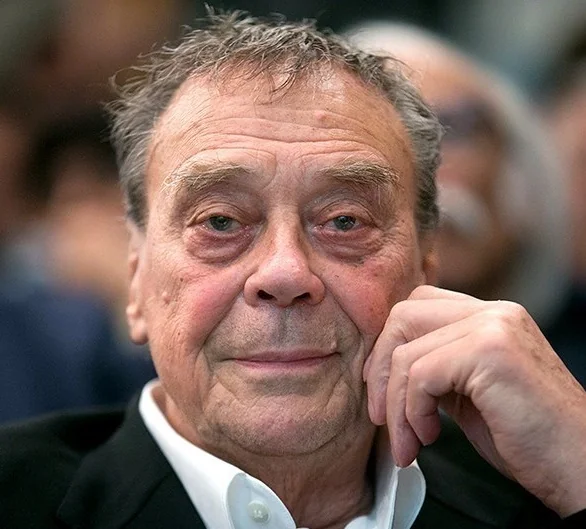
Image from Wikipedia
Image from Wikipedia
Günther Uecker: The Master of Nails, Light, and Radical Visual Language
An Artist Between Material, Movement, and Spiritual Condensation
Günther Uecker was one of the formative German artists of the post-war era. Born on March 13, 1930, in Wendorf and died June 10, 2025, in Düsseldorf, he developed a distinctive visual language that transformed the material nail into a poetic, yet physically charged symbol. He gained worldwide recognition for his relief-like nail images, kinetic objects, and later with glass art and church windows that conveyed his vision of light, space, and transcendence. ([de.wikipedia.org](https://de.wikipedia.org/wiki/G%C3%BCnther_Uecker?utm_source=openai))
Early Influences: War, Displacement, and the Search for a New Form
Uecker's artistic development is closely tied to the experiences of the German post-war period. His childhood was shaped by war and displacement, a biographical background that later manifested in the austere, often silent force of his works. From an early age, he sought a form of imagery that functions beyond traditional painting and makes the tension between vulnerability and order visible. The encounter with abstract art and the spiritual openness to East Asian philosophy and Zen Buddhism added depth to his work. ([galerie-kley.de](https://www.galerie-kley.de/adventskalender/uecker/?utm_source=openai))
After studying at the Kunstakademie in Düsseldorf, Uecker arrived at the artistic stance that would bring him fame: a focus on material, surface, and rhythm. Instead of illusionistically opening up image space, he condensed it into a tactile presence. For him, the nail became not just a tool but a sign, structure, and compositional element all in one. Thus, he made a strong statement against the smooth predictability of conventional art early on. ([kunstsammlung.de](https://www.kunstsammlung.de/de/collection/work/zwischen-hell-und-dunkel-1983?utm_source=openai))
ZERO and the Breakthrough: Light, White, and Radical Reduction
A pivotal step in Uecker's career was his joining the artist group ZERO in 1961. Together with Heinz Mack and Otto Piene, he developed an art that opposed the expressive excess of the 1960s and sought a new, ideal visual language. The group formulated an artistic response to the post-war period, where light, movement, repetition, and reduction played a central role. For Uecker, this meant a breakthrough to an international position. ([geissler-bentler.de](https://www.geissler-bentler.de/kuenstler/guenther-uecker?l=en&utm_source=openai))
The famous nail reliefs uniquely intertwined materiality and spirituality. In works like "Zwischen Hell und Dunkel" from 1983, Uecker uses the nail as a universal material to create swirling spirals and a dual image order. The Kunstsammlung Nordrhein-Westfalen describes this work as a condensation of the contrast between light and darkness, thus an ancient motif in the history of images. In this lies Uecker's strength: his works appear both reduced and monumental at the same time. ([kunstsammlung.de](https://www.kunstsammlung.de/de/collection/work/zwischen-hell-und-dunkel-1983?utm_source=openai))
Between Object, Action, and Kinetic Tension
Uecker's work cannot be limited to static reliefs. Some of his objects belong to kinetic art, a direction where movement, mechanics, and perception determine the character of the work. In later works, he reacted to space, sound, and dramaturgy with motorized devices, rope constructions, and disorienting passage situations. A gallery biography even describes a "Terror Orchestra," with which Uecker expanded the atmosphere of his works to encompass an almost musical, rhythmic level. ([fiftyfifty-galerie.de](https://www.fiftyfifty-galerie.de/kunst/382-gunther-uecker/biografie?utm_source=openai))
This very tension between order and disturbance makes his art so enduring. Uecker not only worked with nails but also with stone, sand, earth, and ash. The Kunstsammlung Nordrhein-Westfalen emphasizes that he created a minimalist, universally readable language through recurring motifs like spirals and sequences. Thus, his works are more than objects: they are condensations of time, movement, and existential experience. ([kunstsammlung.de](https://www.kunstsammlung.de/de/exhibitions/uecker/?utm_source=openai))
International Recognition and Museum Presence
Uecker was internationally present and represented in significant collections. The Kunstsammlung Nordrhein-Westfalen and other institutions document the enduring significance of his work in museums and exhibition venues worldwide. His participation in the Venice Biennale in 1970 also underscores his international visibility. His work thus moved early in the tension between German post-war art, minimal form, and global reception. ([de.wikipedia.org](https://de.wikipedia.org/wiki/G%C3%BCnther_Uecker?utm_source=openai))
Another testament to the breadth of his artistic spectrum is his later turn to glass art. In 2024, four church windows designed by Uecker were solemnly inaugurated in Schwerin Cathedral under the title "Lichtbogen." This late project encompassed many motifs of his life's work: light as a spiritual force, color as spatial energy, and art as a silent, contemplative experience. Thus, a circle closed that led from nail imagery to sacred window art. ([nordkirche.de](https://www.nordkirche.de/nachrichten/nachrichten-detail/nachricht/guenther-ueckers-lichtbogen-kunstwerk-im-schweriner-dom?utm_source=openai))
Style, Significance, and Cultural Impact
Uecker's style is instantly recognizable: white or light-colored surfaces into which thousands of nails are rhythmically hammered create reliefs of great physical presence. His works evoke snowfields, fields, waves, or light reflections without ever losing their material hardness. This interplay of hardness and spirituality makes his art culturally significant. Uecker translated the experience of the post-war era into a formal language that appears both vulnerable and monumental. ([kunstsammlung.de](https://www.kunstsammlung.de/de/collection/work/zwischen-hell-und-dunkel-1983?utm_source=openai))
As an authority of German art after 1945, Uecker stands in line with those artists who redefined the focus on material, perception, and reduction. His works combine composition, surface structure, and an almost meditative strictness. It is precisely for this reason that they are continually re-read in exhibition concepts, collection presentations, and art historical classifications. Uecker remains a key name for anyone wishing to understand the language of post-war modernity. ([kunstsammlung.de](https://www.kunstsammlung.de/de/exhibitions/uecker/?utm_source=openai))
Art Overview Instead of Discography: Why Uecker Fascinates Even Without a Musical Reference
A classical discography does not exist for Günther Uecker, as he was not a musician but a painter, object artist, and installation artist. Nevertheless, his work possesses a strong rhythmic quality that often feels almost musical: repetition, timing, condensation, and variation structure many of his works. Those looking for a "work discography" in a figurative sense will find it in the central groups of works, including nail images, kinetic objects, drawings, book projects, and late glass works. ([de.wikipedia.org](https://de.wikipedia.org/wiki/G%C3%BCnther_Uecker?utm_source=openai))
Critical reception repeatedly highlights his ability to develop a complex visual world from a seemingly simple material. His influence extends from the ZERO movement through minimal and object art to sacred spatial concepts. That Uecker remained artistically active into old age and was still involved in a significant church window project in 2024 shows the continuing relevance of his language. His work remains accessible because it combines formal rigor with emotional and spiritual depth. ([nordkirche.de](https://www.nordkirche.de/nachrichten/nachrichten-detail/nachricht/guenther-ueckers-lichtbogen-kunstwerk-im-schweriner-dom?utm_source=openai))
Conclusion: An Artist Who Transformed Material into a Stance
Günther Uecker is captivating because he created a universal artistic language from the simple nail. His art is reduced yet full of energy, quiet and yet carried by inner movement. Anyone engaging with German post-war art, Zero, kinetic art, and sacred visual language cannot overlook Uecker. His works demonstrate how material becomes knowledge and how surface creates a space for contemplation. ([kunstsammlung.de](https://www.kunstsammlung.de/de/exhibitions/uecker/?utm_source=openai))
Those who experience Günther Uecker in a museum or exhibition do not just see an image but rather a condensed experience of light, time, and resistance. It is precisely the physical presence of his reliefs and the quiet aura of his later works that make him one of the great German artists of the 20th and 21st centuries. A visit to his works is always worthwhile anywhere art is meant to be not only viewed but experienced. ([kunstsammlung.de](https://www.kunstsammlung.de/en/collection/work/zwischen-hell-und-dunkel-1983-english-version?utm_source=openai))
Official Channels of Günther Uecker:
- Instagram: No official profile found
- Facebook: No official profile found
- YouTube: No official profile found
- Spotify: No official profile found
- TikTok: No official profile found
Sources:
- Wikipedia – Günther Uecker
- Kunstsammlung Nordrhein-Westfalen – Zwischen Hell und Dunkel (1983)
- Kunstsammlung Nordrhein-Westfalen – Zwischen Hell und Dunkel (1983), English Version
- Kunstsammlung Nordrhein-Westfalen – Uecker Exhibition
- Nordkirche – Günther Uecker's "Lichtbogen" Artwork in Schwerin Cathedral
- Ostendorff – Biography of Günther Uecker
- fiftyfifty Galerie – Biography of Günther Uecker
- The Independent / AP – Obituary for Günther Uecker
Upcoming Events
Günther Uecker: Reading on the First Anniversary of His Death in Schwerin
Between the Elements: Günther Uecker and Nature
Between the Elements: Günther Uecker and Nature
Between the Elements: Günther Uecker and Nature