John Woo
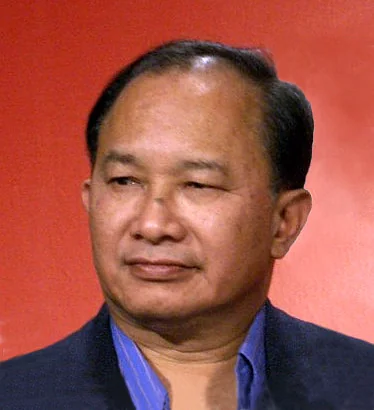
Image from Wikipedia
Image from Wikipedia
John Woo – The Master of Hong Kong Action Cinema and His Cinematic Signature
A Director Who Redefined Action Cinema
John Woo is one of the most influential directors in Asian and international action cinema. With his stylistically defining Hong Kong films, and later with Hollywood productions and recent return projects, he has created a distinctive visual language: poetic violence, melodramatic conflicts, friendship, betrayal, and a sense of choreographed movement. He was born in 1946 in Guangzhou and grew up in Hong Kong, where his artistic development was shaped under often challenging production conditions. ([de.wikipedia.org](https://de.wikipedia.org/wiki/John_Woo?utm_source=openai))
As a director and producer, Woo is considered a central figure in Hong Kong cinema and an artist whose work has permanently changed the global perception of action films. His films combine technical precision with emotional intensity, and it is precisely this connection that has made him a reference point in film criticism, pop culture, and among cinephiles. His name stands for a cinema that merges movement, pathos, and physical drama into a distinctive language. ([de.wikipedia.org](https://de.wikipedia.org/wiki/John_Woo?utm_source=openai))
Biographical Roots and Early Years in Hong Kong
John Woo fled to Hong Kong with his family as a child after they lost their home and safety amid the political upheavals in China. This experience shaped not only his life path but also the thematic depth of his later cinema: loss of homeland, loyalty, guilt, and moral ambiguity feature prominently in many of his works. Woo studied the great images of cinema early on and developed a particular sensitivity to staging, rhythm, and the emotional function of violence. ([de.wikipedia.org](https://de.wikipedia.org/wiki/John_Woo?utm_source=openai))
His career began in the 1970s within the Hong Kong film industry, initially in the realm of comedies and martial arts films. With early works like The Young Dragons, he laid the foundation for a career that broke away from conventional genre paths and increasingly focused on stylized intensification. Even at this stage, it became clear that Woo wanted to deliver not just solid entertainment, but understood image composition, body language, and emotional escalation as central tools. ([moviepilot.de](https://www.moviepilot.de/people/john-woo?utm_source=openai))
The Breakthrough with the Hong Kong Gangster Film
The real breakthrough came with A Better Tomorrow in 1986, known in German-speaking regions as City Wolf. The film made John Woo and Chow Yun-Fat international names and significantly shaped the aesthetics of modern Hong Kong action cinema. The blend of brother drama, gangster film, and ballet of violence set new standards and led to the style often referred to as Heroic Bloodshed. ([de.wikipedia.org](https://de.wikipedia.org/wiki/City_Wolf?utm_source=openai))
In the following years, Woo refined his signature in films like The Killer and Hard Boiled, which are now considered canonical works of the action genre. Critics and film historians describe this phase as a pinnacle of Hong Kong cinema, where Woo dissolved the boundaries between opera, melodrama, and gangster film. His direction employs slow motion, dual guns, catastrophic spatial dramaturgy, and a visual language that not only shows violence but charges it emotionally. ([editorial.rottentomatoes.com](https://editorial.rottentomatoes.com/guide/john-woo/?utm_source=openai))
Hollywood, International Visibility, and the Leap into Global Cinema
In 1993, Woo moved to California and transferred his aesthetic to the US film industry. This shift brought him large budgets, new stars, and international visibility, but also friction with Hollywood's production logic, which he described as more controlling than the work methods in Hong Kong. It was in this tension that the allure of his American films emerged, where Woo further developed his motifs under new industrial conditions. ([de.wikipedia.org](https://de.wikipedia.org/wiki/John_Woo?utm_source=openai))
With Face/Off, he established himself in Hollywood as a director with authority and a distinctive signature. The film won a Saturn Award for Direction and remains one of the defining action titles of the 1990s. Mission: Impossible 2 and Paycheck also mark important stations in his American phase, where Woo translated his themes of identity, loyalty, and sacrifice into mainstream cinema. ([de.wikipedia.org](https://de.wikipedia.org/wiki/John_Woo?utm_source=openai))
Return to Asia and Later Works
After his Hollywood phase, Woo returned to Asia and made large-scale historical and war films. Red Cliff is emblematic of this phase: an epic project with greater historical ambitions, where Woo showcased his affinity for tactical movement, ensemble dramaturgy, and visual spectacle in a new context. His return to China revealed that his artistic development was not confined to a single country or system. ([editorial.rottentomatoes.com](https://editorial.rottentomatoes.com/guide/john-woo/?utm_source=openai))
With Silent Night, Woo made a comeback to Hollywood in 2023. The film, a dialogue-free action thriller, was understood as a deliberately concentrated study on loss, revenge, and visual storytelling. Critics highlighted that Woo returned to the essence of his direction: movement, visual axes, emotional condensation, and a clear, almost musical structure of action sequences. ([rogerebert.com](https://www.rogerebert.com/interviews/john-woo-interview?utm_source=openai))
Current Projects and Artistic Realignment
In September 2024, reports hinted at a new project with the duo Sparks. Woo later confirmed that it is a “half-musical,” a work that expands his well-known action signature in favor of another form of storytelling. This development aligns with his long-standing openness to cross-genre experimentation and shows that his artistic curiosity has not waned even in old age. ([en.wikipedia.org](https://en.wikipedia.org/wiki/John_Woo))
The reinterpretation of The Killer also remains an important reference point in his recent career. Woo revisiting his own classics points to the special significance of these films in his oeuvre: they are not only trademarks but also starting points for an ongoing reflection on style, violence, and morality in cinema. This constitutes a substantial part of his authority as a director. ([en.wikipedia.org](https://en.wikipedia.org/wiki/John_Woo))
Style, Motifs, and Cinematic Language
John Woo's directing style is instantly recognizable. He employs precise choreography, dynamic editing, and a dramatic elevation of the image that often evokes opera and ballet. His action is never merely mechanical movement but an expression of inner conflicts: friendship against duty, honor against betrayal, compassion against violence. ([sensesofcinema.com](https://www.sensesofcinema.com/2000/asian-cinema/dragon/?utm_source=openai))
The religious and moral dimension of his films is also central. Woo's characters often navigate a world of sacrifice, redemption, and ultimate choices. For this reason, his works have had an impact far beyond the genre and have influenced filmmakers in Asia, Europe, and the USA. The combination of pathos, physicality, and emotional elevation has made John Woo one of the most quoted action directors in film history. ([editorial.rottentomatoes.com](https://editorial.rottentomatoes.com/guide/john-woo/?utm_source=openai))
Cultural Influence and Critical Reception
The international reception of Woo ranges from enthusiastic genre analysis to admiring pop culture appreciation. His Hong Kong films have become a stylistic reference point for later action directors and inspired a cinema that thinks of violence as formal choreography. Film critiques and retrospectives particularly commend the emotional power of his images and the consistency with which he has nurtured his cinematic language over decades. ([editorial.rottentomatoes.com](https://editorial.rottentomatoes.com/guide/john-woo/?utm_source=openai))
Awards and industry resonance also attest to his standing. In addition to the Saturn Award for Face/Off and numerous mentions in international film publications, Woo is regularly cited as one of the defining directors of Asian cinema. His work represents a cinema that expands genre boundaries and perceives action as an emotional, culturally charged means of expression. ([imdb.com](https://www.imdb.com/name/nm0000247/awards/?utm_source=openai))
Conclusion: Why John Woo Continues to Fascinate Today
John Woo remains compelling because he has never understood action as merely an effect machine, but as a form of opera, drama, and physical poetry. His films connect technical virtuosity with human vulnerability and have thus reached a global audience that extends far beyond classic action cinema. Experiencing John Woo means witnessing not just spectacular staging but film history in motion. A look at his works is always worthwhile – his images still unfold their greatest impact on the big screen. ([editorial.rottentomatoes.com](https://editorial.rottentomatoes.com/guide/john-woo/?utm_source=openai))
Official Channels of John Woo:
- Instagram: No official profile found
- Facebook: No official profile found
- YouTube: No official profile found
- Spotify: No official profile found
- TikTok: No official profile found