
Katharina Zweig
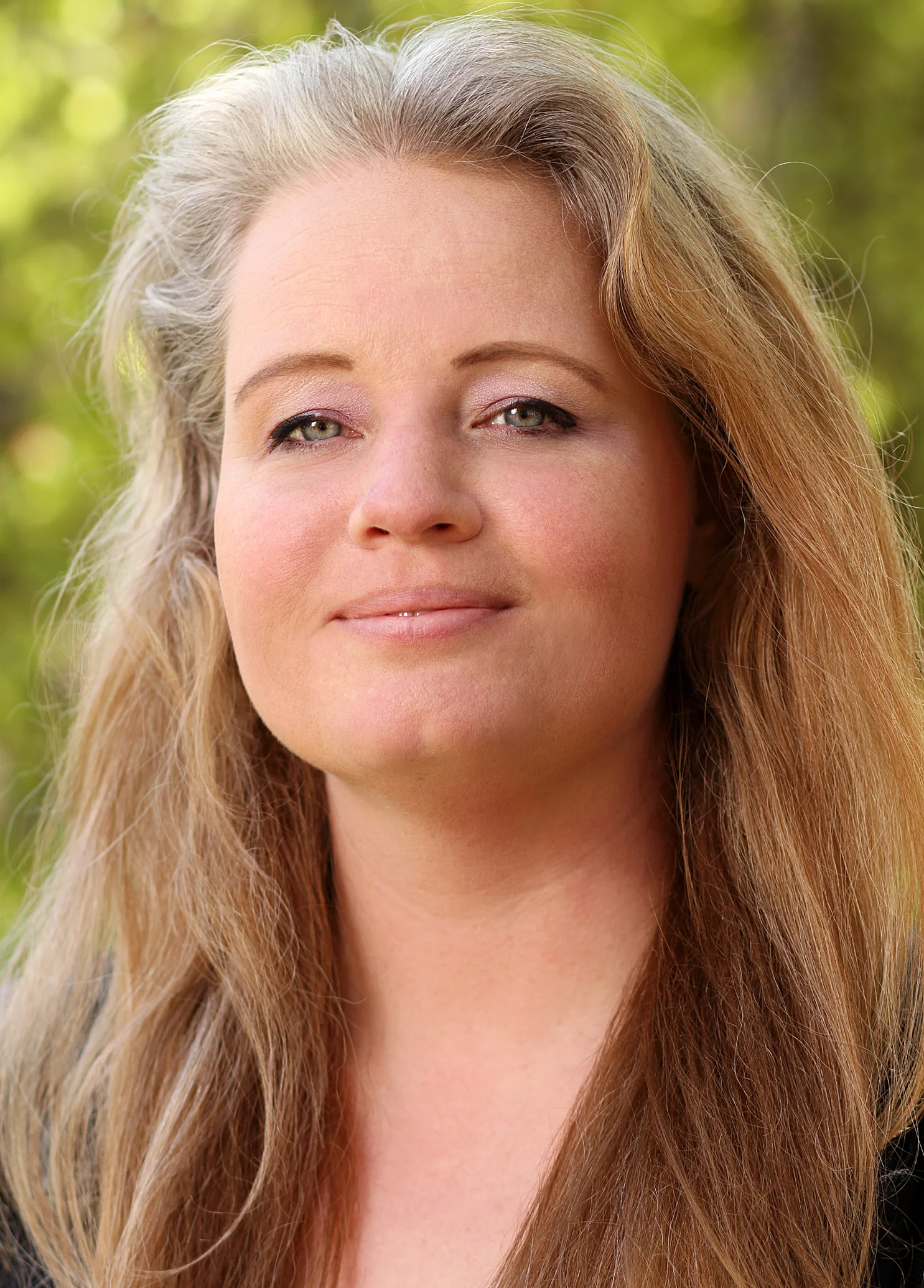
Image from Wikipedia
Image from Wikipedia
Katharina Zweig – the German computer science professor making algorithms understandable
A prominent voice in the AI debate between research, teaching, and society
Katharina Anna Zweig, née Lehmann, was born on May 22, 1976, in Hamburg and is now one of the most recognized German-speaking voices when it comes to artificial intelligence, algorithmic decisions, and digital responsibility. As a university professor at RPTU in Kaiserslautern, she leads the Algorithm Accountability Lab and combines scientific analysis with clear, publicly impactful communication of complex content. Her profile represents a rare combination of theoretical depth, societal relevance, and precise science communication. ([de.wikipedia.org](https://de.wikipedia.org/wiki/Katharina_Zweig?utm_source=openai))
Biographical foundations: From Hamburg to computer science
Katharina Zweig's academic career did not begin directly in computer science but rather in the neighboring natural sciences: She studied biochemistry and bioinformatics and earned her doctorate in 2007 in theoretical computer science with a dissertation on complex networks. This early specialization already indicates the direction of her later work: systemic thinking, structured modeling, and the question of how robust insights can emerge from data. From the start, her research has focused on the interface between mathematical precision and practical applicability. ([aalab.cs.uni-kl.de](https://aalab.cs.uni-kl.de/gruppe/zweig/cv/CurriculumVitae_English.pdf?utm_source=openai))
An important chapter in her academic development was her time in Budapest, where she worked as a postdoc funded by Leopoldina in the group of Tamás Vicsek. This position deepened her engagement with networks, dynamics, and emergent phenomena, which later became central to the analysis of digital systems. Since 2012, she has been a professor in Kaiserslautern, where she has increasingly expanded her focus from pure theory to societal responsibility, software design, and impact assessment. ([aalab.cs.uni-kl.de](https://aalab.cs.uni-kl.de/gruppe/zweig/cv/CurriculumVitae_English.pdf?utm_source=openai))
Career path and scientific authority
Katharina Zweig has established herself not only as a researcher but also as a public intellectual. According to the RPTU research magazine, she is one of the most prominent voices in Germany regarding the responsible use of artificial intelligence. At RPTU, she developed the unique nationwide degree program in socioinformatics, thereby shaping a field that considers technical systems always in relation to social, ethical, and political questions. ([forschungsmagazin.rptu.de](https://forschungsmagazin.rptu.de/index.php/node/231?language_content_entity=en&utm_source=openai))
Her authority stems not only from academic titles but also from her role as an advisor to companies, trade unions, and federal and state politics. This broad impact shows that her research does not remain in an ivory tower but influences real decision-making processes. Those who consider her work recognize a rare combination of scientific expertise, institutional responsibility, and public comprehensibility. ([forschungsmagazin.rptu.de](https://forschungsmagazin.rptu.de/index.php/node/231?language_content_entity=en&utm_source=openai))
Algorithm Accountability Lab: Research with a societal mission
The Algorithm Accountability Lab she leads stands for a clear claim: software should not only be efficient but also developed and used responsibly. The lab's research addresses questions such as fairness, transparency, traceability, and the limits of automated decisions. Particularly in times of data-driven systems, this perspective is of high relevance, as algorithms are no longer merely technical tools but also shape social reality. ([aalab.cs.rptu.de](https://aalab.cs.rptu.de/kontakt/?utm_source=openai))
Her public engagement became especially visible through the founding of AlgorithmWatch in 2016 together with Lorena Jaume-Palasí, Lorenz Matzat, and Matthias Spielkamp. The initiative made the power of algorithmic processes comprehensible to a broader audience and contributed to sharpening the debate about digital decision logics in Germany. The awarding of the Theodor Heuss Medal in 2018 underscores the societal significance of this engagement and honors her role in the democratic confrontation with technology. ([rptu.de](https://rptu.de/newsroom/detail/news/kaiserslauterer-informatikerin-erhaelt-mit-initiative-algorithmwatch-die-theodor-heuss-medaille?utm_source=openai))
Publications and public impact
A significant part of Zweig's influence lies in her ability to translate complex issues into understandable language. The RPTU research magazine describes her as a successful non-fiction author and refers to three bestsellers on artificial intelligence. Her books make it clear that computer science consists not only of code and models but also of decisions, contexts, and consequences that are directly relevant to society. ([forschungsmagazin.rptu.de](https://forschungsmagazin.rptu.de/index.php/node/231?language_content_entity=en&utm_source=openai))
Her current book project, announced for 2025 under the title Does AI Know That It Knows Nothing? with Heyne, fits into this line: It addresses the limits of language models, responsible usage, and the question of what machines can do and what they cannot. In doing so, Zweig positions herself as a sober, well-informed countervoice to technical exaggeration and the digital progress rush. The clarity she provides lends her work journalistic authority. ([forschungsmagazin.rptu.de](https://forschungsmagazin.rptu.de/index.php/node/231?language_content_entity=en&utm_source=openai))
Musical reference? No discography, but a clear intellectual signature
Although the data set presented here suggests the form of an artist page, Katharina Zweig is not a musician but a computer scientist and science communicator. A discography, chart placements, or musical releases are not documented in the verified sources. For a serious representation, it is therefore crucial to focus on her actual professional achievements: research, teaching, public debate, and book publications. ([de.wikipedia.org](https://de.wikipedia.org/wiki/Katharina_Zweig?utm_source=openai))
It is precisely in this clear role profile that her strength lies. Zweig does not work with stage presence in the musical sense, but with intellectual presence, analytical sharpness, and pedagogical precision. Her "performance" occurs in lectures, interviews, research publications, and book projects—places where she translates complex systems into understandable ideas, thereby reaching a broad audience. ([forschungsmagazin.rptu.de](https://forschungsmagazin.rptu.de/node/231?utm_source=openai))
Style, method, and scientific signature
Substantively, Zweig's work represents a connection between network analysis, ethics of responsibility, and social contextualization. Her scientific signature is characterized by structured thinking, interdisciplinary access, and the claim to view technology not in isolation but within its social fabric. This perspective makes her work relevant for research, politics, and education alike. ([aalab.cs.uni-kl.de](https://aalab.cs.uni-kl.de/gruppe/zweig/cv/CurriculumVitae_English.pdf?utm_source=openai))
The interviews and contributions from RPTU also show that she does not understand AI as an omniscient entity but as a tool with clear limitations. This is precisely where the intellectual quality of her approach lies: she explains why statistical patterns cannot replace human judgment and why transparency in digital systems remains indispensable. This stance is scientifically grounded and simultaneously publicly effective. ([forschungsmagazin.rptu.de](https://forschungsmagazin.rptu.de/node/231?utm_source=openai))
Cultural influence and societal relevance
Katharina Zweig has visibly shaped the German debate on artificial intelligence. Her influence extends beyond the university into media, politics, and civil society, where she clarifies terms, contexts, and risks. When discussing algorithmic fairness, digital self-determination, or societal applications of software, one frequently encounters her ideas and formulations in Germany. ([forschungsmagazin.rptu.de](https://forschungsmagazin.rptu.de/index.php/node/231?language_content_entity=en&utm_source=openai))
Her cultural significance arises precisely from this translation achievement: she transforms an abstract technology topic into a public question of responsibility, trust, and control. Thus, she belongs to a generation of scientific personalities that not only produce expertise but also integrate it into democratic discourse. This form of authority is particularly valuable in times of digital upheaval. ([forschungsmagazin.rptu.de](https://forschungsmagazin.rptu.de/node/231?utm_source=openai))
Conclusion: Why Katharina Zweig remains intriguing
Katharina Zweig is fascinating because she connects science with attitude. She not only analyzes algorithms but also their consequences for people, institutions, and public decisions. This creates the tension of her work: from clarity rather than alarmism, from expertise rather than noise, and from societal responsibility rather than technical self-adoration. ([forschungsmagazin.rptu.de](https://forschungsmagazin.rptu.de/node/231?utm_source=openai))
For those interested in the digital future, artificial intelligence, and the responsible handling of technology, she is one of the most important voices in the German-speaking world. A live lecture, an interview, or a reading with Katharina Zweig is worthwhile for anyone who wants to understand how software shapes our world—and why it still cannot think for us. ([forschungsmagazin.rptu.de](https://forschungsmagazin.rptu.de/node/231?utm_source=openai))
Official channels of Katharina Zweig:
- Instagram: No official profile found
- Facebook: No official profile found
- YouTube: No official profile found
- Spotify: No official profile found
- TikTok: No official profile found
Sources:
- Wikipedia – Katharina Zweig
- RPTU / Algorithm Accountability Lab – Contact
- RPTU Research Magazine – The machine does not think
- RPTU Research Magazine – Large Language Models cannot think
- Algorithm Accountability Lab – Curriculum Vitae of Katharina Anna Zweig
- RPTU Newsroom – Theodor Heuss Medal for AlgorithmWatch
- Wikipedia: Image and text source