
Zella-Mehlis
98544 Zella-Mehlis, Germany
Heinrichsbacher Hütte | Hiking & History
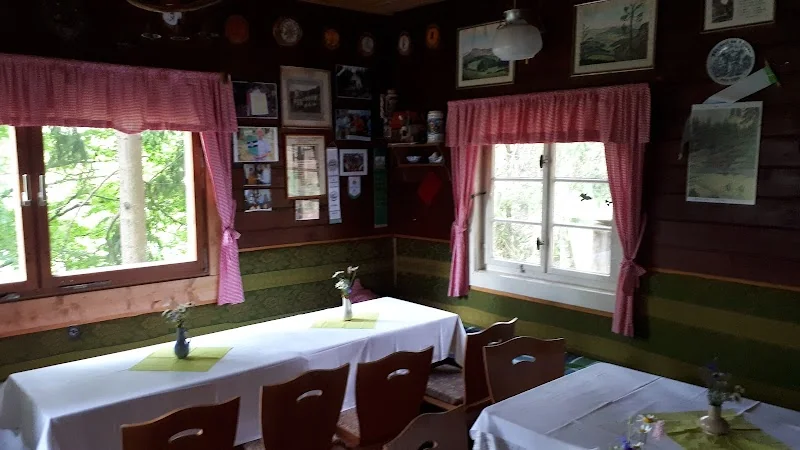
The Heinrichsbacher Hütte in Zella-Mehlis is not an ordinary excursion point, but a place where nature, community life, and regional memory come together. Those who come here are usually looking for not just a rest in the greenery, but also the special mix of forest location, hut tradition, and a history that is deeply rooted in the local dachshund culture. The hut is located in the Heinrichsbachtal and is supported by the Teckelhütte Heinrichsbach Zella-Mehlis e.V., which opens the grounds to highlights for visitors, consciously maintaining it as a hiking destination and historical object. The official and journalistic contributions from the city make it clear that this hut has been sustained for decades by the commitment of many volunteers and is continually enlivened by festivals, work efforts, and public events. At the same time, it is part of a landscape that is closely linked to the Heinrichsbacher Stein, the Gebrannten Stein, the Ruppberg, and various hiking trails. It is precisely this connection of quiet location, visible club history, and active use that makes the Heinrichsbacher Hütte so special. ([zella-mehlis.de](https://zella-mehlis.de/media/pages/buergerservice/stadtanzeiger-amtsblatt/archiv/2792865bc0-1715846522/2024-10-stadtanzeiger.pdf?utm_source=openai))
The search queries surrounding the Heinrichsbacher Hütte clearly show what visitors are really asking about: the location in Zella-Mehlis, pictures, the relationship to the Heinrichsbacher Stein, and whether the hut is even open. This text aims to address exactly that. The hut is seasonally relevant, the paths to it are typical for hikers and nature lovers, and the surroundings offer enough material for a detailed overview with rocks, viewpoints, and traditional sites. Additionally, the history of the facility did not arise by chance, but emerged from an organized dachshund tradition that has been documented since 1924 and led to the establishment of the hut in the Upper Heinrichsbacher Tal in 1928. Today, it is therefore both an excursion destination, a club location, and a reminder of a piece of city history. ([zella-mehlis.de](https://zella-mehlis.de/media/pages/buergerservice/stadtanzeiger-amtsblatt/archiv/2792865bc0-1715846522/2024-10-stadtanzeiger.pdf))
Dachshund Tradition and History of the Heinrichsbacher Hütte
The historical significance of the Heinrichsbacher Hütte does not begin with a classic inn operation, but with a club culture that was closely tied to dachshund breeding. Urban documents record that on May 4, 1924, the Thüringer Teckelklub Ruppberg was founded in the Waldhaus inn. From there, a 100-year organized dachshund tradition developed in Zella-Mehlis, from which the property in the Upper Heinrichsbacher Tal was later acquired and the Teckelhütte with a training facility was built. The club history is not narrated by the responsible parties as mere nostalgia, but as an authentic documentation of a long development, for which the club has an almost complete archive of protocols and original documents. This legacy explains why the hut is still perceived today not only as a meeting point but also as a traditional object. ([zella-mehlis.de](https://zella-mehlis.de/media/pages/buergerservice/stadtanzeiger-amtsblatt/archiv/2792865bc0-1715846522/2024-10-stadtanzeiger.pdf))
For today's perception, it is particularly important that the hut is understood as a lived club asset. According to the city, the Teckelhütte Heinrichsbach Zella-Mehlis e.V. currently has 19 members, so it is not a large apparatus, but a manageable, strongly volunteer-driven community. This is precisely what gives it its charm: The hut is not an anonymous excursion destination, but a place where a few dedicated people have passed down traditions over decades. An article from the city explicitly mentions that it is thanks to the nearly 90-year-old Peter Roth that the Teckelhütte opened for general visitor traffic to the club highlights after the founding of the hut association. The description clearly shows how closely personal responsibility, club life, and public benefit are connected here. The training facility, which was formerly a preparation facility for dogs for fox hunting, is also still a tangible testament to this history. That it is to be restored and made publicly accessible underscores the claim to not only preserve memory but to make it tangible. ([zella-mehlis.de](https://zella-mehlis.de/blog/100-jahre-teckeltradition-ehrenamtler-ausgezeichnet))
The hut is thus more than a pretty destination on the edge of the forest. It represents a development that ranges from the early 1920s through the construction in 1928 to today's public use. An article from 2024 describes that the members want to make the club grounds accessible to highlights as a hiking destination and historical object for the public. This is precisely where the strength of this place lies: It is neither museum-frozen nor fully commercialized, but moves between care, memory, and occasional hospitality. The Heinrichsbacher Hütte is thus an example of the typical Thuringian hut culture, where clubs preserve places in the forest, organize events, and thereby keep regional identity alive. Therefore, those who visit the hut encounter not only a building but a grown history of dog breeding, community work, forest use, and city connection. ([zella-mehlis.de](https://zella-mehlis.de/media/pages/buergerservice/stadtanzeiger-amtsblatt/archiv/2792865bc0-1715846522/2024-10-stadtanzeiger.pdf?utm_source=openai))
Opening Hours, Club Life, and Seasonal Highlights
For visitors, the most important practical information is: The Heinrichsbacher Hütte is not a daily open gastronomy with fixed standard hours, but a seasonally operated club location. The city of Zella-Mehlis specifies the period from April to October for the hut operation; it is opened punctually on weekends and holidays. This is a crucial point for planning, as one should not spontaneously approach the hut like a café in the town center, but rather as a destination for excursion days with regard to the club's schedule. At the same time, the city publications show that regular opening days take place, especially at highlights of the year. Thus, the hut is opened as a hiking destination on Ascension Day, and recurring festivals such as Easter and Pentecost can be found in the event announcements. ([zella-mehlis.de](https://zella-mehlis.de/blog/100-jahre-teckeltradition-ehrenamtler-ausgezeichnet))
The club life at the Heinrichsbacher Hütte appears very down-to-earth and personal. In the official contributions, long-standing volunteers are honored who have taken on tasks such as flag raising, decoration, cleanliness, and support during work efforts over many years. These details show that the hut is supported by people who contribute with a lot of time and reliability. The mention of activities from Easter to Christmas also makes it clear that not only individual holidays count here, but a whole year's feeling of hut operation. When the hut is open, it is often described in regional event notices with food and drinks, barbecue offerings, and a rustic setting. This is not a large event operation, but rather the classic mix of hiking breaks, club hospitality, and social gatherings. Those who love such places appreciate this immediacy. ([zella-mehlis.de](https://zella-mehlis.de/blog/100-jahre-teckeltradition-ehrenamtler-ausgezeichnet))
It is particularly interesting that the hut in Zella-Mehlis does not only live on one date per year, but appears repeatedly in the official event calendars. For Ascension Day, Pentecost, and Easter, it is mentioned as a place where visitors are welcome. This indicates that the hut plays a fixed role in the local annual cycle and is a recurring point of contact for many hikers. The club uses public highlights to keep the hut visible and to bridge the gap between tradition and present. Therefore, anyone planning a visit should check in advance whether a holiday or festival day is approaching. This seasonal logic is part of the experience: The Heinrichsbacher Hütte is not a place of continuous operation, but a destination for the right moment when the grounds are open, the fire is on, and the club members are present. ([zella-mehlis.de](https://zella-mehlis.de/media/pages/buergerservice/stadtanzeiger-amtsblatt/archiv/dd5279bd2f-1747316526/2025-10-stadtanzeiger.pdf?utm_source=openai))
Access, Paths, and Location in Heinrichsbachtal
The location of the Heinrichsbacher Hütte is strongly characterized by hiking paths, not by road traffic or classic proximity to the city center. An official event notice describes the access from Mehlis via the Alte Straße, the Stachelsrain, the Pflanzgarten, and further towards Waldhaus; the Heinrichsbacher Hütte is located to the left of the path. This is particularly helpful for route planning, as it locates the hut as a destination for a walk or a small hike and not as a place with direct access. For visitors planning an outing with children, friends, or in a hiking group, this access is well suited as it embeds the visit into a real nature route. The path itself is part of the attractiveness, not just the hut at the end. ([oberzentrum-suedthueringen.de](https://oberzentrum-suedthueringen.de/events/osterfest-auf-der-heinrichsbacher-huette/?utm_source=openai))
The official tourist information also considers the area more as a hiking and nature space. In a flyer about tours around Zella-Mehlis, the sports field Alte Straße is mentioned as a starting point and parking option. From there, signposted paths lead over mountain meadows and notable points such as Dammwiese, Heinrichsbacher Stein, and other sections of the Reifweg towards Ruppberg. This shows that the Heinrichsbacher Hütte is best integrated into a route that connects several natural destinations. For those who want to drive directly to the door and park right in front, the available sources do not indicate an official hut parking lot. That is why the footpath is the cleanest and most honest recommendation. In practice, this means: better plan hiking shoes, take in the surroundings, and understand the visit as part of a tour. ([tourismus.zella-mehlis.de](https://tourismus.zella-mehlis.de/images/pdf/Wanderflyer.pdf))
Content-wise, the hut also belongs to a particularly beautiful landscape image of Zella-Mehlis. The Heinrichsbacher Stein, the Gebrannte Stein, the Dammwiese, and the Ruppberg are linked as orientation points in several official tours. The tourist information describes the path over the Gebrannten Stein to the Veilchenbrunnen, while a flyer for the hike to Ruppberg mentions the Heinrichsbacher Stein with views of Zella-Mehlis, the Ruppberg, and the Dolmar. This shows that the hut is embedded in a larger network of viewpoints and forest paths. Therefore, those who want to visit the Heinrichsbacher Hütte typically experience not only the destination but also the way there as part of the stay. For those seeking access, parking, and entry, the most important insight is: The place is primarily a hiking destination, and therein lies its charm. ([tourismus.zella-mehlis.de](https://tourismus.zella-mehlis.de/images/pdf/Wanderflyer.pdf))
Heinrichsbacher Stein: Climbing, Views, and Nature
The Heinrichsbacher Stein is somewhat like the sporty and scenic neighbor of the hut with its own profile. The Tourist Information Zella-Mehlis describes it as a rock with a distinctive overhang and points out that it is interesting for families, beginners, and experienced climbers. There are 26 climbing routes from grades 3 to 9, porphyry as the rock type, a maximum rock height of 17 meters, and an average rock height of 15 meters. At the same time, there is a ban on new routes, which is an important note for climbers. These facts make the Heinrichsbacher Stein a clearly defined climbing area that is appealing not only because of the movement but also due to its manageable size and location in the forest. Therefore, those who visit the Heinrichsbacher Hütte can perceive the rock as an additional destination in the vicinity. ([tourismus.zella-mehlis.de](https://tourismus.zella-mehlis.de/natur-erleben-zella-mehlis/aktiv-im-sommer/klettern))
For hikers, the Heinrichsbacher Stein is primarily a place for views and orientation. Official hiking documents mention the view of Zella-Mehlis, the Ruppberg, and the Dolmar, and the city's tour suggestions regularly list the rock as an intermediate destination. It also plays a role in winter, as the ski trail or winter route runs through the area, and the tourist information has pointed out low snow cover there. This clarifies that the Heinrichsbacher Stein is not just a single rock but part of a year-round network of paths and natural landscapes. Therefore, those who visit the hut can gather different impressions depending on the season: in summer as a hiking and resting point, in winter as an orientation in the snowy landscape, and for climbers as a rock destination with clear rules. ([tourismus.zella-mehlis.de](https://tourismus.zella-mehlis.de/images/pdf/Wanderflyer.pdf))
The connection between the hut and the rock also embodies a typical strength of the region: short distances between nature, movement, and refreshment. The Heinrichsbacher Stein is described in tourist communication as a rock with a camping area at the foot and as a good family destination. This fits excellently with the Heinrichsbacher Hütte, which is also perceived as a rustic, not overburdened place. Together, they create an excursion image that is neither loud nor over-staged, but rather consists of paths, forest, rock, and club life. Therefore, those looking for images or impressions do not find a single monument but a cohesive atmosphere of forest hut, rock, and hilly landscape. This is exactly what makes the area interesting for visitors who prefer to experience genuine Thuringian nature rather than artificial attractions. ([tourismus.zella-mehlis.de](https://tourismus.zella-mehlis.de/natur-erleben-zella-mehlis/aktiv-im-sommer/klettern))
Festivals, Ascension Day, and Other Events
The Heinrichsbacher Hütte is particularly lively when a festival is approaching in the annual cycle. In the city's announcements, it is mentioned as a place that will be reopened for visitors as a hiking destination on Ascension Day. At the same time, there are indications of Easter and Pentecost festivals, where food and drinks are offered, and the hut is used as a rustic meeting point. This shows that the hut does not only function as a quiet place in the forest but also as a seasonal social space for hikers, families, and club friends. The events are deliberately kept simple: barbecue, coffee, cake, drinks, and an open hut situation instead of large stage shows. This simplicity is the real charm for many. ([zella-mehlis.de](https://zella-mehlis.de/media/pages/buergerservice/stadtanzeiger-amtsblatt/archiv/dd5279bd2f-1747316526/2025-10-stadtanzeiger.pdf?utm_source=openai))
The overview of the events makes it clear that the hut in Zella-Mehlis is integrated into a larger network of holiday destinations. In addition to the Heinrichsbacher Hütte, other local destinations such as Teckelhütte, Schäferbaude, or Ruppberg are also mentioned in the calendars. This creates a regional holiday pattern where hikers can choose between several destinations. For the Heinrichsbacher Hütte, this is an advantage because it is not perceived in isolation but as part of a vibrant hut culture where clubs maintain their places and open them on special days. Especially on Ascension Day or Pentecost, one can plan a tour that meaningfully connects the path, the refreshment, and the view. ([zella-mehlis.de](https://zella-mehlis.de/media/pages/buergerservice/stadtanzeiger-amtsblatt/archiv/04a656d128-1748412534/2025-11-stadtanzeiger.pdf))
In the end, the Heinrichsbacher Hütte remains primarily a place for people who enjoy hiking with a clear goal and discovering history in the terrain. The club has made the hut publicly accessible for decades, the city appreciates the commitment, and the surroundings provide the fitting backdrop with Heinrichsbacher Stein, Gebranntem Stein, and Ruppberg. When visiting the hut on an open holiday, one experiences this mix of club work, nature, and regional identity. This may not be a loud attraction, but precisely for that reason, it is a credible and very sympathetic one. So, for those looking for a rustic hut in Zella-Mehlis, this is a place that is defined not by size but by attitude, tradition, and the right moment of the year. ([zella-mehlis.de](https://zella-mehlis.de/blog/100-jahre-teckeltradition-ehrenamtler-ausgezeichnet))
Sources:
- City of Zella-Mehlis - 100 Years of Dachshund Tradition - Volunteers Honored
- City Newspaper Zella-Mehlis - Notes on the History of the 100-Year Dachshund Tradition
- Tourist Information Zella-Mehlis - Climbing at Heinrichsbacher Stein
- Tourist Information Zella-Mehlis - Over the Burnt Stone to the Violet Fountain
- City Newspaper Zella-Mehlis - Pentecost Festival and Event Calendar 2025
- Upper Center South Thuringia - Easter Festival at the Heinrichsbacher Hütte
Show moreShow less
Heinrichsbacher Hütte | Hiking & History
The Heinrichsbacher Hütte in Zella-Mehlis is not an ordinary excursion point, but a place where nature, community life, and regional memory come together. Those who come here are usually looking for not just a rest in the greenery, but also the special mix of forest location, hut tradition, and a history that is deeply rooted in the local dachshund culture. The hut is located in the Heinrichsbachtal and is supported by the Teckelhütte Heinrichsbach Zella-Mehlis e.V., which opens the grounds to highlights for visitors, consciously maintaining it as a hiking destination and historical object. The official and journalistic contributions from the city make it clear that this hut has been sustained for decades by the commitment of many volunteers and is continually enlivened by festivals, work efforts, and public events. At the same time, it is part of a landscape that is closely linked to the Heinrichsbacher Stein, the Gebrannten Stein, the Ruppberg, and various hiking trails. It is precisely this connection of quiet location, visible club history, and active use that makes the Heinrichsbacher Hütte so special. ([zella-mehlis.de](https://zella-mehlis.de/media/pages/buergerservice/stadtanzeiger-amtsblatt/archiv/2792865bc0-1715846522/2024-10-stadtanzeiger.pdf?utm_source=openai))
The search queries surrounding the Heinrichsbacher Hütte clearly show what visitors are really asking about: the location in Zella-Mehlis, pictures, the relationship to the Heinrichsbacher Stein, and whether the hut is even open. This text aims to address exactly that. The hut is seasonally relevant, the paths to it are typical for hikers and nature lovers, and the surroundings offer enough material for a detailed overview with rocks, viewpoints, and traditional sites. Additionally, the history of the facility did not arise by chance, but emerged from an organized dachshund tradition that has been documented since 1924 and led to the establishment of the hut in the Upper Heinrichsbacher Tal in 1928. Today, it is therefore both an excursion destination, a club location, and a reminder of a piece of city history. ([zella-mehlis.de](https://zella-mehlis.de/media/pages/buergerservice/stadtanzeiger-amtsblatt/archiv/2792865bc0-1715846522/2024-10-stadtanzeiger.pdf))
Dachshund Tradition and History of the Heinrichsbacher Hütte
The historical significance of the Heinrichsbacher Hütte does not begin with a classic inn operation, but with a club culture that was closely tied to dachshund breeding. Urban documents record that on May 4, 1924, the Thüringer Teckelklub Ruppberg was founded in the Waldhaus inn. From there, a 100-year organized dachshund tradition developed in Zella-Mehlis, from which the property in the Upper Heinrichsbacher Tal was later acquired and the Teckelhütte with a training facility was built. The club history is not narrated by the responsible parties as mere nostalgia, but as an authentic documentation of a long development, for which the club has an almost complete archive of protocols and original documents. This legacy explains why the hut is still perceived today not only as a meeting point but also as a traditional object. ([zella-mehlis.de](https://zella-mehlis.de/media/pages/buergerservice/stadtanzeiger-amtsblatt/archiv/2792865bc0-1715846522/2024-10-stadtanzeiger.pdf))
For today's perception, it is particularly important that the hut is understood as a lived club asset. According to the city, the Teckelhütte Heinrichsbach Zella-Mehlis e.V. currently has 19 members, so it is not a large apparatus, but a manageable, strongly volunteer-driven community. This is precisely what gives it its charm: The hut is not an anonymous excursion destination, but a place where a few dedicated people have passed down traditions over decades. An article from the city explicitly mentions that it is thanks to the nearly 90-year-old Peter Roth that the Teckelhütte opened for general visitor traffic to the club highlights after the founding of the hut association. The description clearly shows how closely personal responsibility, club life, and public benefit are connected here. The training facility, which was formerly a preparation facility for dogs for fox hunting, is also still a tangible testament to this history. That it is to be restored and made publicly accessible underscores the claim to not only preserve memory but to make it tangible. ([zella-mehlis.de](https://zella-mehlis.de/blog/100-jahre-teckeltradition-ehrenamtler-ausgezeichnet))
The hut is thus more than a pretty destination on the edge of the forest. It represents a development that ranges from the early 1920s through the construction in 1928 to today's public use. An article from 2024 describes that the members want to make the club grounds accessible to highlights as a hiking destination and historical object for the public. This is precisely where the strength of this place lies: It is neither museum-frozen nor fully commercialized, but moves between care, memory, and occasional hospitality. The Heinrichsbacher Hütte is thus an example of the typical Thuringian hut culture, where clubs preserve places in the forest, organize events, and thereby keep regional identity alive. Therefore, those who visit the hut encounter not only a building but a grown history of dog breeding, community work, forest use, and city connection. ([zella-mehlis.de](https://zella-mehlis.de/media/pages/buergerservice/stadtanzeiger-amtsblatt/archiv/2792865bc0-1715846522/2024-10-stadtanzeiger.pdf?utm_source=openai))
Opening Hours, Club Life, and Seasonal Highlights
For visitors, the most important practical information is: The Heinrichsbacher Hütte is not a daily open gastronomy with fixed standard hours, but a seasonally operated club location. The city of Zella-Mehlis specifies the period from April to October for the hut operation; it is opened punctually on weekends and holidays. This is a crucial point for planning, as one should not spontaneously approach the hut like a café in the town center, but rather as a destination for excursion days with regard to the club's schedule. At the same time, the city publications show that regular opening days take place, especially at highlights of the year. Thus, the hut is opened as a hiking destination on Ascension Day, and recurring festivals such as Easter and Pentecost can be found in the event announcements. ([zella-mehlis.de](https://zella-mehlis.de/blog/100-jahre-teckeltradition-ehrenamtler-ausgezeichnet))
The club life at the Heinrichsbacher Hütte appears very down-to-earth and personal. In the official contributions, long-standing volunteers are honored who have taken on tasks such as flag raising, decoration, cleanliness, and support during work efforts over many years. These details show that the hut is supported by people who contribute with a lot of time and reliability. The mention of activities from Easter to Christmas also makes it clear that not only individual holidays count here, but a whole year's feeling of hut operation. When the hut is open, it is often described in regional event notices with food and drinks, barbecue offerings, and a rustic setting. This is not a large event operation, but rather the classic mix of hiking breaks, club hospitality, and social gatherings. Those who love such places appreciate this immediacy. ([zella-mehlis.de](https://zella-mehlis.de/blog/100-jahre-teckeltradition-ehrenamtler-ausgezeichnet))
It is particularly interesting that the hut in Zella-Mehlis does not only live on one date per year, but appears repeatedly in the official event calendars. For Ascension Day, Pentecost, and Easter, it is mentioned as a place where visitors are welcome. This indicates that the hut plays a fixed role in the local annual cycle and is a recurring point of contact for many hikers. The club uses public highlights to keep the hut visible and to bridge the gap between tradition and present. Therefore, anyone planning a visit should check in advance whether a holiday or festival day is approaching. This seasonal logic is part of the experience: The Heinrichsbacher Hütte is not a place of continuous operation, but a destination for the right moment when the grounds are open, the fire is on, and the club members are present. ([zella-mehlis.de](https://zella-mehlis.de/media/pages/buergerservice/stadtanzeiger-amtsblatt/archiv/dd5279bd2f-1747316526/2025-10-stadtanzeiger.pdf?utm_source=openai))
Access, Paths, and Location in Heinrichsbachtal
The location of the Heinrichsbacher Hütte is strongly characterized by hiking paths, not by road traffic or classic proximity to the city center. An official event notice describes the access from Mehlis via the Alte Straße, the Stachelsrain, the Pflanzgarten, and further towards Waldhaus; the Heinrichsbacher Hütte is located to the left of the path. This is particularly helpful for route planning, as it locates the hut as a destination for a walk or a small hike and not as a place with direct access. For visitors planning an outing with children, friends, or in a hiking group, this access is well suited as it embeds the visit into a real nature route. The path itself is part of the attractiveness, not just the hut at the end. ([oberzentrum-suedthueringen.de](https://oberzentrum-suedthueringen.de/events/osterfest-auf-der-heinrichsbacher-huette/?utm_source=openai))
The official tourist information also considers the area more as a hiking and nature space. In a flyer about tours around Zella-Mehlis, the sports field Alte Straße is mentioned as a starting point and parking option. From there, signposted paths lead over mountain meadows and notable points such as Dammwiese, Heinrichsbacher Stein, and other sections of the Reifweg towards Ruppberg. This shows that the Heinrichsbacher Hütte is best integrated into a route that connects several natural destinations. For those who want to drive directly to the door and park right in front, the available sources do not indicate an official hut parking lot. That is why the footpath is the cleanest and most honest recommendation. In practice, this means: better plan hiking shoes, take in the surroundings, and understand the visit as part of a tour. ([tourismus.zella-mehlis.de](https://tourismus.zella-mehlis.de/images/pdf/Wanderflyer.pdf))
Content-wise, the hut also belongs to a particularly beautiful landscape image of Zella-Mehlis. The Heinrichsbacher Stein, the Gebrannte Stein, the Dammwiese, and the Ruppberg are linked as orientation points in several official tours. The tourist information describes the path over the Gebrannten Stein to the Veilchenbrunnen, while a flyer for the hike to Ruppberg mentions the Heinrichsbacher Stein with views of Zella-Mehlis, the Ruppberg, and the Dolmar. This shows that the hut is embedded in a larger network of viewpoints and forest paths. Therefore, those who want to visit the Heinrichsbacher Hütte typically experience not only the destination but also the way there as part of the stay. For those seeking access, parking, and entry, the most important insight is: The place is primarily a hiking destination, and therein lies its charm. ([tourismus.zella-mehlis.de](https://tourismus.zella-mehlis.de/images/pdf/Wanderflyer.pdf))
Heinrichsbacher Stein: Climbing, Views, and Nature
The Heinrichsbacher Stein is somewhat like the sporty and scenic neighbor of the hut with its own profile. The Tourist Information Zella-Mehlis describes it as a rock with a distinctive overhang and points out that it is interesting for families, beginners, and experienced climbers. There are 26 climbing routes from grades 3 to 9, porphyry as the rock type, a maximum rock height of 17 meters, and an average rock height of 15 meters. At the same time, there is a ban on new routes, which is an important note for climbers. These facts make the Heinrichsbacher Stein a clearly defined climbing area that is appealing not only because of the movement but also due to its manageable size and location in the forest. Therefore, those who visit the Heinrichsbacher Hütte can perceive the rock as an additional destination in the vicinity. ([tourismus.zella-mehlis.de](https://tourismus.zella-mehlis.de/natur-erleben-zella-mehlis/aktiv-im-sommer/klettern))
For hikers, the Heinrichsbacher Stein is primarily a place for views and orientation. Official hiking documents mention the view of Zella-Mehlis, the Ruppberg, and the Dolmar, and the city's tour suggestions regularly list the rock as an intermediate destination. It also plays a role in winter, as the ski trail or winter route runs through the area, and the tourist information has pointed out low snow cover there. This clarifies that the Heinrichsbacher Stein is not just a single rock but part of a year-round network of paths and natural landscapes. Therefore, those who visit the hut can gather different impressions depending on the season: in summer as a hiking and resting point, in winter as an orientation in the snowy landscape, and for climbers as a rock destination with clear rules. ([tourismus.zella-mehlis.de](https://tourismus.zella-mehlis.de/images/pdf/Wanderflyer.pdf))
The connection between the hut and the rock also embodies a typical strength of the region: short distances between nature, movement, and refreshment. The Heinrichsbacher Stein is described in tourist communication as a rock with a camping area at the foot and as a good family destination. This fits excellently with the Heinrichsbacher Hütte, which is also perceived as a rustic, not overburdened place. Together, they create an excursion image that is neither loud nor over-staged, but rather consists of paths, forest, rock, and club life. Therefore, those looking for images or impressions do not find a single monument but a cohesive atmosphere of forest hut, rock, and hilly landscape. This is exactly what makes the area interesting for visitors who prefer to experience genuine Thuringian nature rather than artificial attractions. ([tourismus.zella-mehlis.de](https://tourismus.zella-mehlis.de/natur-erleben-zella-mehlis/aktiv-im-sommer/klettern))
Festivals, Ascension Day, and Other Events
The Heinrichsbacher Hütte is particularly lively when a festival is approaching in the annual cycle. In the city's announcements, it is mentioned as a place that will be reopened for visitors as a hiking destination on Ascension Day. At the same time, there are indications of Easter and Pentecost festivals, where food and drinks are offered, and the hut is used as a rustic meeting point. This shows that the hut does not only function as a quiet place in the forest but also as a seasonal social space for hikers, families, and club friends. The events are deliberately kept simple: barbecue, coffee, cake, drinks, and an open hut situation instead of large stage shows. This simplicity is the real charm for many. ([zella-mehlis.de](https://zella-mehlis.de/media/pages/buergerservice/stadtanzeiger-amtsblatt/archiv/dd5279bd2f-1747316526/2025-10-stadtanzeiger.pdf?utm_source=openai))
The overview of the events makes it clear that the hut in Zella-Mehlis is integrated into a larger network of holiday destinations. In addition to the Heinrichsbacher Hütte, other local destinations such as Teckelhütte, Schäferbaude, or Ruppberg are also mentioned in the calendars. This creates a regional holiday pattern where hikers can choose between several destinations. For the Heinrichsbacher Hütte, this is an advantage because it is not perceived in isolation but as part of a vibrant hut culture where clubs maintain their places and open them on special days. Especially on Ascension Day or Pentecost, one can plan a tour that meaningfully connects the path, the refreshment, and the view. ([zella-mehlis.de](https://zella-mehlis.de/media/pages/buergerservice/stadtanzeiger-amtsblatt/archiv/04a656d128-1748412534/2025-11-stadtanzeiger.pdf))
In the end, the Heinrichsbacher Hütte remains primarily a place for people who enjoy hiking with a clear goal and discovering history in the terrain. The club has made the hut publicly accessible for decades, the city appreciates the commitment, and the surroundings provide the fitting backdrop with Heinrichsbacher Stein, Gebranntem Stein, and Ruppberg. When visiting the hut on an open holiday, one experiences this mix of club work, nature, and regional identity. This may not be a loud attraction, but precisely for that reason, it is a credible and very sympathetic one. So, for those looking for a rustic hut in Zella-Mehlis, this is a place that is defined not by size but by attitude, tradition, and the right moment of the year. ([zella-mehlis.de](https://zella-mehlis.de/blog/100-jahre-teckeltradition-ehrenamtler-ausgezeichnet))
Sources:
- City of Zella-Mehlis - 100 Years of Dachshund Tradition - Volunteers Honored
- City Newspaper Zella-Mehlis - Notes on the History of the 100-Year Dachshund Tradition
- Tourist Information Zella-Mehlis - Climbing at Heinrichsbacher Stein
- Tourist Information Zella-Mehlis - Over the Burnt Stone to the Violet Fountain
- City Newspaper Zella-Mehlis - Pentecost Festival and Event Calendar 2025
- Upper Center South Thuringia - Easter Festival at the Heinrichsbacher Hütte
Heinrichsbacher Hütte | Hiking & History
The Heinrichsbacher Hütte in Zella-Mehlis is not an ordinary excursion point, but a place where nature, community life, and regional memory come together. Those who come here are usually looking for not just a rest in the greenery, but also the special mix of forest location, hut tradition, and a history that is deeply rooted in the local dachshund culture. The hut is located in the Heinrichsbachtal and is supported by the Teckelhütte Heinrichsbach Zella-Mehlis e.V., which opens the grounds to highlights for visitors, consciously maintaining it as a hiking destination and historical object. The official and journalistic contributions from the city make it clear that this hut has been sustained for decades by the commitment of many volunteers and is continually enlivened by festivals, work efforts, and public events. At the same time, it is part of a landscape that is closely linked to the Heinrichsbacher Stein, the Gebrannten Stein, the Ruppberg, and various hiking trails. It is precisely this connection of quiet location, visible club history, and active use that makes the Heinrichsbacher Hütte so special. ([zella-mehlis.de](https://zella-mehlis.de/media/pages/buergerservice/stadtanzeiger-amtsblatt/archiv/2792865bc0-1715846522/2024-10-stadtanzeiger.pdf?utm_source=openai))
The search queries surrounding the Heinrichsbacher Hütte clearly show what visitors are really asking about: the location in Zella-Mehlis, pictures, the relationship to the Heinrichsbacher Stein, and whether the hut is even open. This text aims to address exactly that. The hut is seasonally relevant, the paths to it are typical for hikers and nature lovers, and the surroundings offer enough material for a detailed overview with rocks, viewpoints, and traditional sites. Additionally, the history of the facility did not arise by chance, but emerged from an organized dachshund tradition that has been documented since 1924 and led to the establishment of the hut in the Upper Heinrichsbacher Tal in 1928. Today, it is therefore both an excursion destination, a club location, and a reminder of a piece of city history. ([zella-mehlis.de](https://zella-mehlis.de/media/pages/buergerservice/stadtanzeiger-amtsblatt/archiv/2792865bc0-1715846522/2024-10-stadtanzeiger.pdf))
Dachshund Tradition and History of the Heinrichsbacher Hütte
The historical significance of the Heinrichsbacher Hütte does not begin with a classic inn operation, but with a club culture that was closely tied to dachshund breeding. Urban documents record that on May 4, 1924, the Thüringer Teckelklub Ruppberg was founded in the Waldhaus inn. From there, a 100-year organized dachshund tradition developed in Zella-Mehlis, from which the property in the Upper Heinrichsbacher Tal was later acquired and the Teckelhütte with a training facility was built. The club history is not narrated by the responsible parties as mere nostalgia, but as an authentic documentation of a long development, for which the club has an almost complete archive of protocols and original documents. This legacy explains why the hut is still perceived today not only as a meeting point but also as a traditional object. ([zella-mehlis.de](https://zella-mehlis.de/media/pages/buergerservice/stadtanzeiger-amtsblatt/archiv/2792865bc0-1715846522/2024-10-stadtanzeiger.pdf))
For today's perception, it is particularly important that the hut is understood as a lived club asset. According to the city, the Teckelhütte Heinrichsbach Zella-Mehlis e.V. currently has 19 members, so it is not a large apparatus, but a manageable, strongly volunteer-driven community. This is precisely what gives it its charm: The hut is not an anonymous excursion destination, but a place where a few dedicated people have passed down traditions over decades. An article from the city explicitly mentions that it is thanks to the nearly 90-year-old Peter Roth that the Teckelhütte opened for general visitor traffic to the club highlights after the founding of the hut association. The description clearly shows how closely personal responsibility, club life, and public benefit are connected here. The training facility, which was formerly a preparation facility for dogs for fox hunting, is also still a tangible testament to this history. That it is to be restored and made publicly accessible underscores the claim to not only preserve memory but to make it tangible. ([zella-mehlis.de](https://zella-mehlis.de/blog/100-jahre-teckeltradition-ehrenamtler-ausgezeichnet))
The hut is thus more than a pretty destination on the edge of the forest. It represents a development that ranges from the early 1920s through the construction in 1928 to today's public use. An article from 2024 describes that the members want to make the club grounds accessible to highlights as a hiking destination and historical object for the public. This is precisely where the strength of this place lies: It is neither museum-frozen nor fully commercialized, but moves between care, memory, and occasional hospitality. The Heinrichsbacher Hütte is thus an example of the typical Thuringian hut culture, where clubs preserve places in the forest, organize events, and thereby keep regional identity alive. Therefore, those who visit the hut encounter not only a building but a grown history of dog breeding, community work, forest use, and city connection. ([zella-mehlis.de](https://zella-mehlis.de/media/pages/buergerservice/stadtanzeiger-amtsblatt/archiv/2792865bc0-1715846522/2024-10-stadtanzeiger.pdf?utm_source=openai))
Opening Hours, Club Life, and Seasonal Highlights
For visitors, the most important practical information is: The Heinrichsbacher Hütte is not a daily open gastronomy with fixed standard hours, but a seasonally operated club location. The city of Zella-Mehlis specifies the period from April to October for the hut operation; it is opened punctually on weekends and holidays. This is a crucial point for planning, as one should not spontaneously approach the hut like a café in the town center, but rather as a destination for excursion days with regard to the club's schedule. At the same time, the city publications show that regular opening days take place, especially at highlights of the year. Thus, the hut is opened as a hiking destination on Ascension Day, and recurring festivals such as Easter and Pentecost can be found in the event announcements. ([zella-mehlis.de](https://zella-mehlis.de/blog/100-jahre-teckeltradition-ehrenamtler-ausgezeichnet))
The club life at the Heinrichsbacher Hütte appears very down-to-earth and personal. In the official contributions, long-standing volunteers are honored who have taken on tasks such as flag raising, decoration, cleanliness, and support during work efforts over many years. These details show that the hut is supported by people who contribute with a lot of time and reliability. The mention of activities from Easter to Christmas also makes it clear that not only individual holidays count here, but a whole year's feeling of hut operation. When the hut is open, it is often described in regional event notices with food and drinks, barbecue offerings, and a rustic setting. This is not a large event operation, but rather the classic mix of hiking breaks, club hospitality, and social gatherings. Those who love such places appreciate this immediacy. ([zella-mehlis.de](https://zella-mehlis.de/blog/100-jahre-teckeltradition-ehrenamtler-ausgezeichnet))
It is particularly interesting that the hut in Zella-Mehlis does not only live on one date per year, but appears repeatedly in the official event calendars. For Ascension Day, Pentecost, and Easter, it is mentioned as a place where visitors are welcome. This indicates that the hut plays a fixed role in the local annual cycle and is a recurring point of contact for many hikers. The club uses public highlights to keep the hut visible and to bridge the gap between tradition and present. Therefore, anyone planning a visit should check in advance whether a holiday or festival day is approaching. This seasonal logic is part of the experience: The Heinrichsbacher Hütte is not a place of continuous operation, but a destination for the right moment when the grounds are open, the fire is on, and the club members are present. ([zella-mehlis.de](https://zella-mehlis.de/media/pages/buergerservice/stadtanzeiger-amtsblatt/archiv/dd5279bd2f-1747316526/2025-10-stadtanzeiger.pdf?utm_source=openai))
Access, Paths, and Location in Heinrichsbachtal
The location of the Heinrichsbacher Hütte is strongly characterized by hiking paths, not by road traffic or classic proximity to the city center. An official event notice describes the access from Mehlis via the Alte Straße, the Stachelsrain, the Pflanzgarten, and further towards Waldhaus; the Heinrichsbacher Hütte is located to the left of the path. This is particularly helpful for route planning, as it locates the hut as a destination for a walk or a small hike and not as a place with direct access. For visitors planning an outing with children, friends, or in a hiking group, this access is well suited as it embeds the visit into a real nature route. The path itself is part of the attractiveness, not just the hut at the end. ([oberzentrum-suedthueringen.de](https://oberzentrum-suedthueringen.de/events/osterfest-auf-der-heinrichsbacher-huette/?utm_source=openai))
The official tourist information also considers the area more as a hiking and nature space. In a flyer about tours around Zella-Mehlis, the sports field Alte Straße is mentioned as a starting point and parking option. From there, signposted paths lead over mountain meadows and notable points such as Dammwiese, Heinrichsbacher Stein, and other sections of the Reifweg towards Ruppberg. This shows that the Heinrichsbacher Hütte is best integrated into a route that connects several natural destinations. For those who want to drive directly to the door and park right in front, the available sources do not indicate an official hut parking lot. That is why the footpath is the cleanest and most honest recommendation. In practice, this means: better plan hiking shoes, take in the surroundings, and understand the visit as part of a tour. ([tourismus.zella-mehlis.de](https://tourismus.zella-mehlis.de/images/pdf/Wanderflyer.pdf))
Content-wise, the hut also belongs to a particularly beautiful landscape image of Zella-Mehlis. The Heinrichsbacher Stein, the Gebrannte Stein, the Dammwiese, and the Ruppberg are linked as orientation points in several official tours. The tourist information describes the path over the Gebrannten Stein to the Veilchenbrunnen, while a flyer for the hike to Ruppberg mentions the Heinrichsbacher Stein with views of Zella-Mehlis, the Ruppberg, and the Dolmar. This shows that the hut is embedded in a larger network of viewpoints and forest paths. Therefore, those who want to visit the Heinrichsbacher Hütte typically experience not only the destination but also the way there as part of the stay. For those seeking access, parking, and entry, the most important insight is: The place is primarily a hiking destination, and therein lies its charm. ([tourismus.zella-mehlis.de](https://tourismus.zella-mehlis.de/images/pdf/Wanderflyer.pdf))
Heinrichsbacher Stein: Climbing, Views, and Nature
The Heinrichsbacher Stein is somewhat like the sporty and scenic neighbor of the hut with its own profile. The Tourist Information Zella-Mehlis describes it as a rock with a distinctive overhang and points out that it is interesting for families, beginners, and experienced climbers. There are 26 climbing routes from grades 3 to 9, porphyry as the rock type, a maximum rock height of 17 meters, and an average rock height of 15 meters. At the same time, there is a ban on new routes, which is an important note for climbers. These facts make the Heinrichsbacher Stein a clearly defined climbing area that is appealing not only because of the movement but also due to its manageable size and location in the forest. Therefore, those who visit the Heinrichsbacher Hütte can perceive the rock as an additional destination in the vicinity. ([tourismus.zella-mehlis.de](https://tourismus.zella-mehlis.de/natur-erleben-zella-mehlis/aktiv-im-sommer/klettern))
For hikers, the Heinrichsbacher Stein is primarily a place for views and orientation. Official hiking documents mention the view of Zella-Mehlis, the Ruppberg, and the Dolmar, and the city's tour suggestions regularly list the rock as an intermediate destination. It also plays a role in winter, as the ski trail or winter route runs through the area, and the tourist information has pointed out low snow cover there. This clarifies that the Heinrichsbacher Stein is not just a single rock but part of a year-round network of paths and natural landscapes. Therefore, those who visit the hut can gather different impressions depending on the season: in summer as a hiking and resting point, in winter as an orientation in the snowy landscape, and for climbers as a rock destination with clear rules. ([tourismus.zella-mehlis.de](https://tourismus.zella-mehlis.de/images/pdf/Wanderflyer.pdf))
The connection between the hut and the rock also embodies a typical strength of the region: short distances between nature, movement, and refreshment. The Heinrichsbacher Stein is described in tourist communication as a rock with a camping area at the foot and as a good family destination. This fits excellently with the Heinrichsbacher Hütte, which is also perceived as a rustic, not overburdened place. Together, they create an excursion image that is neither loud nor over-staged, but rather consists of paths, forest, rock, and club life. Therefore, those looking for images or impressions do not find a single monument but a cohesive atmosphere of forest hut, rock, and hilly landscape. This is exactly what makes the area interesting for visitors who prefer to experience genuine Thuringian nature rather than artificial attractions. ([tourismus.zella-mehlis.de](https://tourismus.zella-mehlis.de/natur-erleben-zella-mehlis/aktiv-im-sommer/klettern))
Festivals, Ascension Day, and Other Events
The Heinrichsbacher Hütte is particularly lively when a festival is approaching in the annual cycle. In the city's announcements, it is mentioned as a place that will be reopened for visitors as a hiking destination on Ascension Day. At the same time, there are indications of Easter and Pentecost festivals, where food and drinks are offered, and the hut is used as a rustic meeting point. This shows that the hut does not only function as a quiet place in the forest but also as a seasonal social space for hikers, families, and club friends. The events are deliberately kept simple: barbecue, coffee, cake, drinks, and an open hut situation instead of large stage shows. This simplicity is the real charm for many. ([zella-mehlis.de](https://zella-mehlis.de/media/pages/buergerservice/stadtanzeiger-amtsblatt/archiv/dd5279bd2f-1747316526/2025-10-stadtanzeiger.pdf?utm_source=openai))
The overview of the events makes it clear that the hut in Zella-Mehlis is integrated into a larger network of holiday destinations. In addition to the Heinrichsbacher Hütte, other local destinations such as Teckelhütte, Schäferbaude, or Ruppberg are also mentioned in the calendars. This creates a regional holiday pattern where hikers can choose between several destinations. For the Heinrichsbacher Hütte, this is an advantage because it is not perceived in isolation but as part of a vibrant hut culture where clubs maintain their places and open them on special days. Especially on Ascension Day or Pentecost, one can plan a tour that meaningfully connects the path, the refreshment, and the view. ([zella-mehlis.de](https://zella-mehlis.de/media/pages/buergerservice/stadtanzeiger-amtsblatt/archiv/04a656d128-1748412534/2025-11-stadtanzeiger.pdf))
In the end, the Heinrichsbacher Hütte remains primarily a place for people who enjoy hiking with a clear goal and discovering history in the terrain. The club has made the hut publicly accessible for decades, the city appreciates the commitment, and the surroundings provide the fitting backdrop with Heinrichsbacher Stein, Gebranntem Stein, and Ruppberg. When visiting the hut on an open holiday, one experiences this mix of club work, nature, and regional identity. This may not be a loud attraction, but precisely for that reason, it is a credible and very sympathetic one. So, for those looking for a rustic hut in Zella-Mehlis, this is a place that is defined not by size but by attitude, tradition, and the right moment of the year. ([zella-mehlis.de](https://zella-mehlis.de/blog/100-jahre-teckeltradition-ehrenamtler-ausgezeichnet))
Sources:
- City of Zella-Mehlis - 100 Years of Dachshund Tradition - Volunteers Honored
- City Newspaper Zella-Mehlis - Notes on the History of the 100-Year Dachshund Tradition
- Tourist Information Zella-Mehlis - Climbing at Heinrichsbacher Stein
- Tourist Information Zella-Mehlis - Over the Burnt Stone to the Violet Fountain
- City Newspaper Zella-Mehlis - Pentecost Festival and Event Calendar 2025
- Upper Center South Thuringia - Easter Festival at the Heinrichsbacher Hütte
Upcoming Events
No events found
Frequently Asked Questions
Reviews
Katrin Z.
10. March 2021
It's lovely when club members are present. However, often no one is there, and therefore refreshments are not possible.
Bauhof Zella-Mehlis ZM
11. December 2022
Michael Schael
25. August 2021
Great hut at the top.
Krank nach Wahrheit
21. June 2024
Christa Ott
24. April 2021