
Edgar Selge
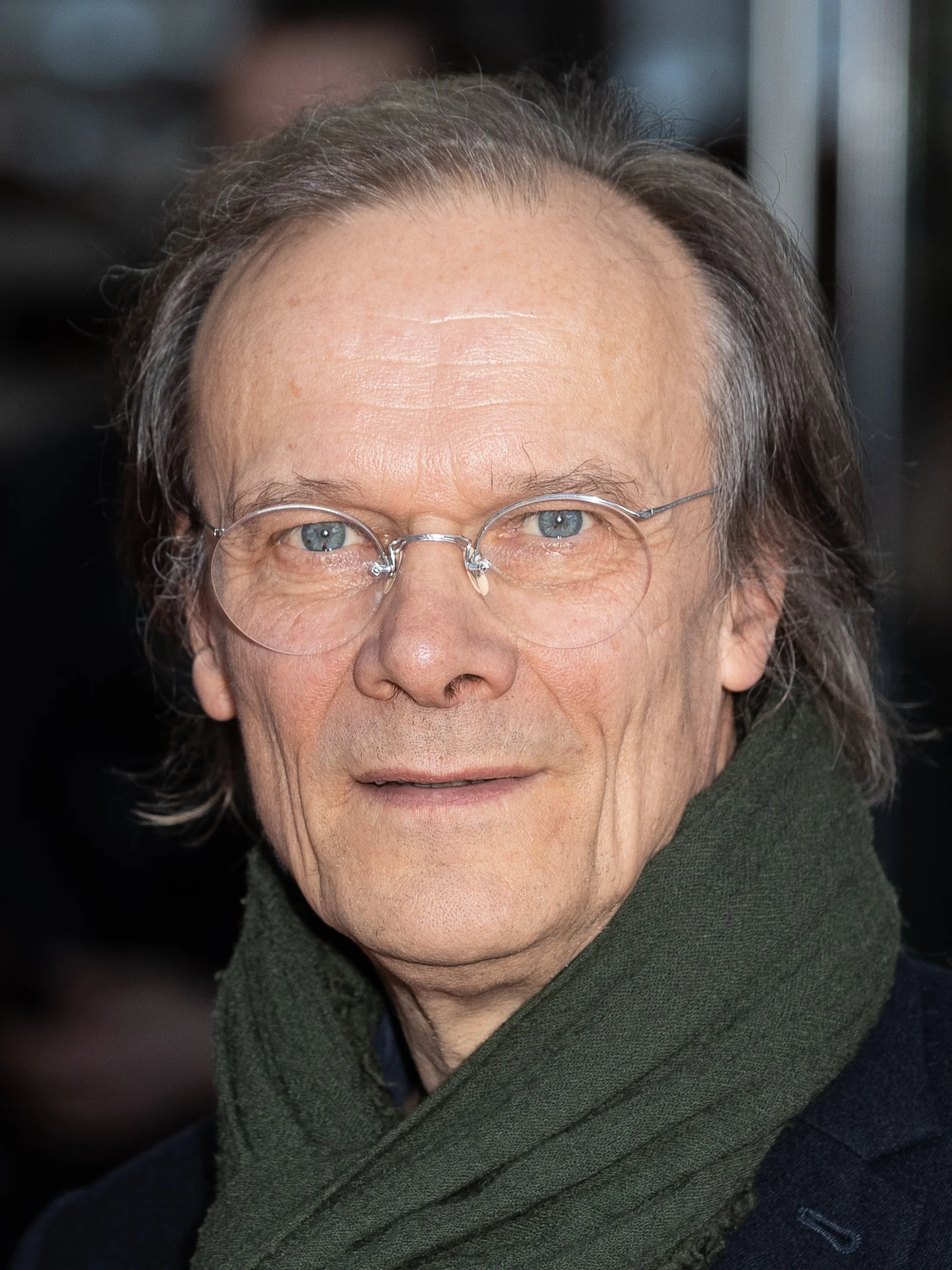
Image from Wikipedia
Image from Wikipedia
Edgar Selge: Character Actor, Author, and One of the Most Distinctive Voices in German Cultural Life
A Life Between Stage, Camera, and Literature
Edgar Selge, born on March 27, 1948, in Brilon, is one of the defining German actors of his generation and has simultaneously established himself as a writer. His biography connects an early upbringing in a family shaped by music and culture with an exceptionally multifaceted career on theater stages, in front of the camera, and within the literary scene. He became known to a broad audience primarily as Commissioner Jürgen Tauber in the ARD series Polizeiruf 110, a role he played from 1998 to 2009. ([de.wikipedia.org](https://de.wikipedia.org/wiki/Edgar_Selge))
Biography: Origins, Influences, and Education
Selge was born the fourth of five children. His parents fled from Königsberg to Westphalia at the end of World War II; his father was a jurist and later the head of a juvenile prison. The unique atmosphere of his childhood home, where cultural education and music played an important role, left lasting impressions and is clearly visible in his later autobiographical writing. ([de.wikipedia.org](https://de.wikipedia.org/wiki/Edgar_Selge))
After studying philosophy and German literature in Munich and a scholarship at Trinity College in Dublin, Selge devoted himself to acting. In 1974, he began his training at the Otto Falckenberg School in Munich and completed it in 1975. While still a student, he debuted at the German Theater in Göttingen before becoming a member of the ensemble at the Schillertheater in Berlin. These early stages mark the beginning of an acting career, one that quickly focused on substance, precision, and stage presence. ([de.wikipedia.org](https://de.wikipedia.org/wiki/Edgar_Selge))
The Breakthrough on Stage: Munich Kammerspiele and Artistic Maturity
For nearly two decades, Selge shaped the Munich Kammerspiele, first as a member of the ensemble and later in guest roles. There, he collaborated with directors such as Dieter Dorn, Thomas Langhoff, Robert Wilson, Hans Lietzau, and Franz Xaver Kroetz. This phase solidified his reputation as a versatile character actor who combines psychological depth with strong linguistic precision. ([steffi-line.de](https://www.steffi-line.de/archiv_text/nost_buehne/19s_selge.htm?utm_source=openai))
Selge's work in theater is characterized by remarkable versatility. Whether classic material, modern directorial theater, or literary adaptations, he always brought a concentrated, often fragile intensity that revealed layers in his roles rather than merely playing them. This is at the core of his artistic development: finding the balance between intellectual control and emotional permeability. ([steffi-line.de](https://www.steffi-line.de/archiv_text/nost_buehne/19s_selge.htm?utm_source=openai))
Success in Film and Television: From Ensemble to Cultural Icon
In front of the camera, Selge appeared in more than 70 film and television productions. His film debut came in 1982 with War and Peace, followed by numerous guest roles in crime shows during the 1980s, such as Der Fahnder, Derrick, Der Alte, and Tatort. For him, the transition from the theater stage to television was not a break but an expansion of an already distinctive acting range. ([de.wikipedia.org](https://de.wikipedia.org/wiki/Edgar_Selge))
He became particularly well-known for the character of the one-armed Commissioner Jürgen Tauber in Polizeiruf 110. Between 1998 and 2009, he infused this role with a mix of toughness, vulnerability, and quiet authority that has left a deep imprint on television memory. Alongside this, he took on notable roles in films and TV productions such as Rennschwein Rudi Rüssel, Der neue Mann, Poll, Unterwerfung, Das Geheimnis der Freiheit, Ökozid, Marianengraben, and Leibniz – Chronik eines verschollenen Bildes. ([de.wikipedia.org](https://de.wikipedia.org/wiki/Edgar_Selge))
Awards: Critical Recognition and Institutional Authority
Selge's work has been awarded numerous accolades. For Ein blinder Held – Die Liebe des Otto Weidt, he received the Seoul International Drama Award for Best Actor in 2014. For Unterwerfung, he was honored as Actor of the Year in 2016, receiving both the German Theatre Prize Der Faust and the Rolf-Mares-Prize. Additionally, he has won the Grimme Prize in 2006 and 2007, the Goldene Kamera in 2007, and in 2022, the Literature Prize of the City of Fulda for his literary debut. ([de.wikipedia.org](https://de.wikipedia.org/wiki/Edgar_Selge))
These awards represent not only popularity but also enduring artistic authority. Selge is seen by critics and institutions alike as a serious, reflective, and aesthetically uncompromising artist. His career demonstrates how stage work, film acting, and literary writing can mutually enrich each other without losing their individual distinctiveness. ([munzinger.de](https://www.munzinger.de/register/portrait/biographien/_/00/000023654?utm_source=openai))
Literary Debut: When Biography Becomes Literature
In 2021, Selge's autofictional debut Hast du uns endlich gefunden was published. The book tells the story of a twelve-year-old boy in post-war Germany and during the economic miracle, growing up in a culture-loving family while experiencing violence and the aftermath of National Socialist thinking. The work received positive reviews and multiple awards; it also became a significant title in the German-speaking book market in 2022. ([de.wikipedia.org](https://de.wikipedia.org/wiki/Edgar_Selge))
In this book, Selge's artistic perspective becomes particularly dense: memory is not romanticized but precisely, relentlessly, and with literary sensitivity elaborated. His writing expands the craft of acting into an intimate, reflective dimension where family history, German contemporary history, and personal vulnerability intersect. This gives his entire body of work a special credibility and depth. ([de.wikipedia.org](https://de.wikipedia.org/wiki/Hast_du_uns_endlich_gefunden?utm_source=openai))
Current Projects and Recent Work
In recent years, Selge has remained active, though more selectively than before. In 2024, he was seen in the road movie Marianengraben, and in 2025, he took on the title role in Edgar Reitz’s Leibniz – Chronik eines verschollenen Bildes. These works showcase an artist who focuses his role choices on precision, relevance, and artistic weight. ([filmportal.de](https://www.filmportal.de/person/edgar-selge_7047887bf2624989912d6d29f529ff44))
Moreover, he remains persistently present in theater and cultural-political debates. Selge continues to be a figure whose name is not only associated with successful roles but also with a stance, intellectual demand, and a clear positioning within the German cultural landscape. ([de.wikipedia.org](https://de.wikipedia.org/wiki/Edgar_Selge))
Style, Impact, and Cultural Influence
Edgar Selge represents a style of acting based on accuracy, textual work, and psychological nuance. His roles rarely rely on flamboyant gestures; they unfold their impact through inner tension, rhythmic speech, and a stage presence that retains its intensity even on television. This combination has made him a distinctive character actor. ([steffi-line.de](https://www.steffi-line.de/archiv_text/nost_buehne/19s_selge.htm?utm_source=openai))
His cultural influence extends beyond individual successes. In Polizeiruf 110, he shaped one of the most distinctive investigative characters in German television, while on stage, with both classic and modern works, he sharpened the profile of an actor who can mediate between institution and experiment. As an author, he expands this impact towards memory literature and testimony. ([de.wikipedia.org](https://de.wikipedia.org/wiki/Edgar_Selge))
Discography and Musical Reception
No musical discography in the strict sense is documented for Edgar Selge. The search for albums, singles, chart positions, or press reception related to music yields no reliable results in verified sources, since Selge works as an actor and writer, not as a musician. Therefore, his artistic profile lies within acting, theater, and literature. ([de.wikipedia.org](https://de.wikipedia.org/wiki/Edgar_Selge?utm_source=openai))
At the same time, his family history is marked by music: his father was regarded as a talented pianist and held house concerts, greatly influencing Selge's early cultural socialization. This biographical closeness to music partly explains the special sensitivity of his language and role work, but does not replace an own history of musical publication. ([de.wikipedia.org](https://de.wikipedia.org/wiki/Edgar_Selge?utm_source=openai))
Conclusion: An Artist with Depth, Integrity, and Lasting Charisma
Edgar Selge fascinates as he encapsulates German cultural history in a single career: theater, television, cinema, literature, and public stance intertwine in him. He is an actor of rare precision, an author with autobiographical weight, and an artist whose work is alive with seriousness, concentration, and human complexity. Encountering him means meeting a personality that imbues every role with intellectual and emotional substance rather than a calculated pose. ([de.wikipedia.org](https://de.wikipedia.org/wiki/Edgar_Selge))
For this reason, Edgar Selge remains a worthwhile discovery for all who appreciate demanding acting and strong cultural narratives. His career illustrates how vibrant German stage and television art can be when virtuosity transforms from showmanship into a stance. Experiencing him live means encountering a master of nuance and inner resonance. ([archiv.burg-huelshoff.de](https://www.archiv.burg-huelshoff.de/programm/kuenstlerinnen/edgar-selge))
Official Channels of Edgar Selge:
- Instagram: no official profile found
- Facebook: no official profile found
- YouTube: no official profile found
- Spotify: no official profile found
- TikTok: no official profile found
Sources:
- Wikipedia – Edgar Selge
- filmportal.de – Edgar Selge
- Hoestermann Agency – Edgar Selge
- Burg Hülshoff – Edgar Selge
- epd Film – Edgar Selge
- Der Tagesspiegel – Interview with Edgar Selge
- Der Tagesspiegel – Edgar Selge on his 70th Birthday
- NDR Kultur – Edgar Selge in Neustrelitz
- Wikipedia: Image and Text Source
Upcoming Events
Jura's Last Winter
Edgar Selge reads Jura's Last Winter in the Sheddachhalle Göttingen: an evening full of memory, language, and historical depth. 2.10.2026, from €22. Secure tickets now. #Literaturherbst
Jura's Last Winter
An evening full of literature and history in Göttingen: Edgar Selge reads Jura's Last Winter in the Sheddachhalle. Experience it live on 02.10.2026. #LiteratureAutumn