
Girolamo Frescobaldi
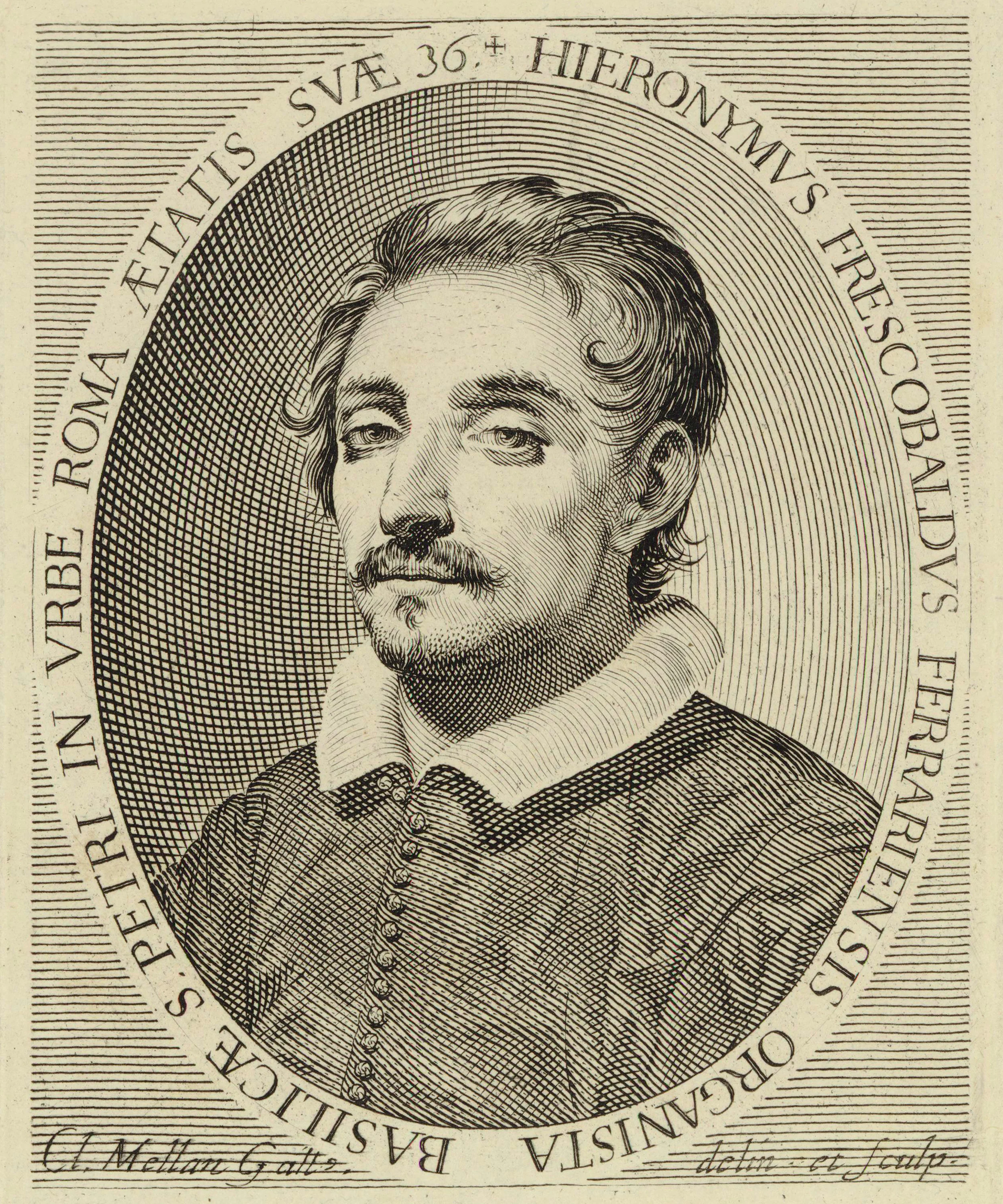
Image from Wikipedia
Image from Wikipedia
Girolamo Frescobaldi – The Sound Architect of the Early Baroque
A Master Who Redefined the Keyboard Instrument
Girolamo Frescobaldi is considered one of the defining figures in European music history. Baptized in Ferrara and passing away in Rome in 1643, the composer, organist, and harpsichordist was one of the most important keyboard musicians in Italy and shaped the language of the early Baroque with a force that reached far beyond his time. Even during his lifetime, he was regarded as a virtuoso exceptional musician whose works elevated the expressive possibilities of the organ and harpsichord to a new level. ([en.wikipedia.org](https://en.wikipedia.org/wiki/Girolamo_Frescobaldi))
Biography: Ferrara, Education, and the Journey to Rome
Frescobaldi was born in 1583 in Ferrara, a city that provided an exceptionally rich musical environment in the late 16th century. He studied with Luzzasco Luzzaschi, a respected composer and court organist, and grew up in an environment where sonic experimentation, contrapuntal mastery, and courtly representation were closely intertwined. Contemporary reports depict the image of a child prodigy who was led through various cities in Italy at an early age and quickly gained the attention of influential patrons. ([en.wikipedia.org](https://en.wikipedia.org/wiki/Girolamo_Frescobaldi))
In 1608, Frescobaldi received the significant position of organist at St. Peter's in Rome, a role he held with interruptions until his death. Apart from brief stays in Mantua and Florence, Rome remained the center of his career where he operated in close proximity to ecclesiastical power, cultural patronage, and demanding musical culture. This position not only made him a sought-after musician but also an authority on composition, improvisation, and stylistic innovation. ([academic.oup.com](https://academic.oup.com/reference/62400/reference-article-abstract/555391120?login=false))
Highlights of His Career and Artistic Development
Frescobaldi's career did not follow a linear progression of courtly positions but rather a continuous consolidation of his artistic authority. His printed collections show a development from his courtly-influenced early works to a distinct, highly differentiated musical language for keyboard instruments. Particularly striking is his ability to combine strict contrapuntal techniques with free, rhetorical expression. This tension between order and freedom became the hallmark of his musical career. ([academic.oup.com](https://academic.oup.com/reference/62400/reference-article-abstract/555391120?login=false))
Even in the 1630s, Frescobaldi remained productive and influential. Treccani reports that in his later years he published new works and revised and reissued earlier versions; a pupil described his astonishing creative power and the admiration he inspired in Rome. This phase reveals a composer who not only maintained his repertoire but consciously sharpened and renewed his musical handwriting. ([treccani.it](https://www.treccani.it/enciclopedia/gerolamo-frescobaldi_%28Enciclopedia-Italiana%29/))
Discography in a Historical Sense: The Key Prints and Collections
Frescobaldi's "discography" consists in his case of groundbreaking publications that document his career and continue to shape his repertoire today. Central collections include the Fantasie of 1608, the Toccate e partite of 1615, the Ricercari et canzoni franzese of 1615, the Capricci of 1624, the second keyboard book of 1627, and the Fiori musicali of 1635. Additionally, there are ensemble canzonas, vocal music, madrigals, motets, and arias that showcase his stylistic range. ([en.wikipedia.org](https://en.wikipedia.org/wiki/List_of_compositions_by_Girolamo_Frescobaldi))
Particularly important are the Toccate, as they show Frescobaldi as a pioneer of free keyboard fantasy. Oxford Bibliographies emphasizes that he was the first significant figure to write almost exclusively instrumental music and that he developed a rich, imaginative language for the keyboard. His music ranges between strict polyphony, varied forms, dance movements, and liturgical models; it is precisely from this diversity that its historical rank arose. ([academic.oup.com](https://academic.oup.com/reference/62400/reference-article-abstract/555391120?login=false))
Style: Between Counterpoint, Rhetoric, and Sonic Audacity
Frescobaldi's style blends the Ferraran contrapuntal tradition with impulses from Venetian, Neapolitan, and madrigal-inspired soundscapes. In his works, free toccatas, intricate ricercari, capricci, canzonas, and variations based on popular dances and ostinati come together. The music is characterized by sudden contrasts, rhetorical gestures, harmonic boldness, and a pronounced sense of sound dramaturgy. ([academic.oup.com](https://academic.oup.com/reference/62400/reference-article-abstract/555391120?login=false))
In his organ and harpsichord pieces, Frescobaldi's mastery of tension is particularly evident. Sources describe him as a composer who expanded the expressive range of the keyboard instrument, for instance through daring chromatic twists, dissonant clashes, and a treatment of musical material that departs from rigid composition. This approach made his works a laboratory of Baroque style for later generations. ([encyclopedia.com](https://www.encyclopedia.com/people/literature-and-arts/music-history-composers-and-performers-biographies/girolamo-frescobaldi?utm_source=openai))
Liturgical Grandeur: The Fiori musicali as a Pinnacle
The Fiori musicali, released in 1635, is regarded as the pinnacle of Frescobaldi's liturgical work. SOMM Recordings describes the collection as his last work, encompassing three masses and marking a high point of the organ mass genre. In this music, intricate contrapuntal work, ecclesiastical function, and aesthetic authority coalesce into a piece that had an impact beyond the Italian organ tradition. ([somm-recordings.com](https://somm-recordings.com/recording/frescobaldi-fiori-musicali/))
Notably, the influence of this collection is remarkable. Oxford Bibliographies notes that Frescobaldi's contrapuntal pieces were copied by Johann Sebastian Bach, Carl Philipp Emanuel Bach, Johann Philipp Kirnberger, and Johann Nikolaus Forkel, and that the Fiori musicali served as a model of strict composition well into the 19th century. This clearly demonstrates that Frescobaldi was not just a master of his century but a lasting reference point in the European composition tradition. ([academic.oup.com](https://academic.oup.com/reference/62400/reference-article-abstract/555391120?login=false))
Influence and Cultural Significance
Frescobaldi's influence extended far beyond Italy. Among his most important students and admirers was Johann Jakob Froberger, who studied with him in Rome and carried his teachings into the German-speaking world. His works also influenced Henry Purcell, Johann Pachelbel, and Johann Sebastian Bach; particularly in the north German organ school and in the development of the toccata and the stylus fantasticus, he left a deep mark. ([academic.oup.com](https://academic.oup.com/reference/62400/reference-article-abstract/555391120?login=false))
Even later music historiography recognized his significance early on. Contemporary critics already saw him as one of the great trendsetters of keyboard style, and later musicology described him as a key figure who influenced the development of keyboard music over generations. Even in the 19th century, his music remained present, through editions and studies that renewed his importance for the musical heritage of Europe. ([academic.oup.com](https://academic.oup.com/reference/62400/reference-article-abstract/555391120?login=false))
Current Recordings and Contemporary Reception
Even today, Frescobaldi remains a vibrant reference point for recordings on historical and modern keyboard instruments. Warner Classics released the edition Frescobaldi: Toccatas et danses in 2024, highlighting his extraordinary compositional inventiveness and noting that Scott Ross dedicated his last recording project largely to these works. Such projects demonstrate how strongly Frescobaldi's work continues to be regarded as a reference for virtuosity, stylistic awareness, and historical interpretation. ([warnerclassics.com](https://www.warnerclassics.com/release/frescobaldi-toccatas-et-danses))
SOMM Recordings emphasizes the status of the Fiori musicali in a recording as a "highwater-mark" of the organ mass. ECM Records and other labels feature Frescobaldi in their catalogs, documenting his ongoing presence in the repertoire. His music thus remains not solely in a museum context but is part of an active performance culture where organists and harpsichordists continuously find new interpretations. ([somm-recordings.com](https://somm-recordings.com/recording/frescobaldi-fiori-musicali/))
Conclusion: Why Frescobaldi Continues to Fascinate
Girolamo Frescobaldi fascinates because he reimagined the sound of the keyboard instrument with visionary assurance. His musical career intertwines virtuosity, intellectual rigor, and emotional audacity into a body of work that decisively shaped the early Baroque. Anyone who listens to Frescobaldi encounters not only historical music but a composer who helped pave the way from the Renaissance to the modernity of the Baroque. ([academic.oup.com](https://academic.oup.com/reference/62400/reference-article-abstract/555391120?login=false))
Here lies his enduring tension: Frescobaldi is a master of form and also an inventor of the moment, an architect of counterpoint and a poet of free gesture. His works deserve to be experienced in concert halls, on the organ bench, and in the studio, where their subtleties, their dissonances, and their breath become immediately palpable. Those who wish to experience the music of the early Baroque in all its intensity should discover Frescobaldi live and in authentic interpretation. ([encyclopedia.com](https://www.encyclopedia.com/people/literature-and-arts/music-history-composers-and-performers-biographies/girolamo-frescobaldi?utm_source=openai))
Official Channels of Girolamo Frescobaldi:
- Instagram: no official profile found
- Facebook: no official profile found
- YouTube: no official profile found
- Spotify: no official profile found
- TikTok: no official profile found
Sources:
- Wikipedia – Girolamo Frescobaldi
- Wikipedia – Girolamo Frescobaldi (English version)
- Treccani – Gerolamo Frescobaldi
- Oxford Bibliographies in Music – Girolamo Frescobaldi
- Warner Classics – Frescobaldi: Toccatas et danses
- SOMM Recordings – Frescobaldi: Fiori musicali
- ECM Records – Girolamo Frescobaldi
- Encyclopedia.com – Baroque Keyboard Music