
Nordwestdeutsche Philharmonie
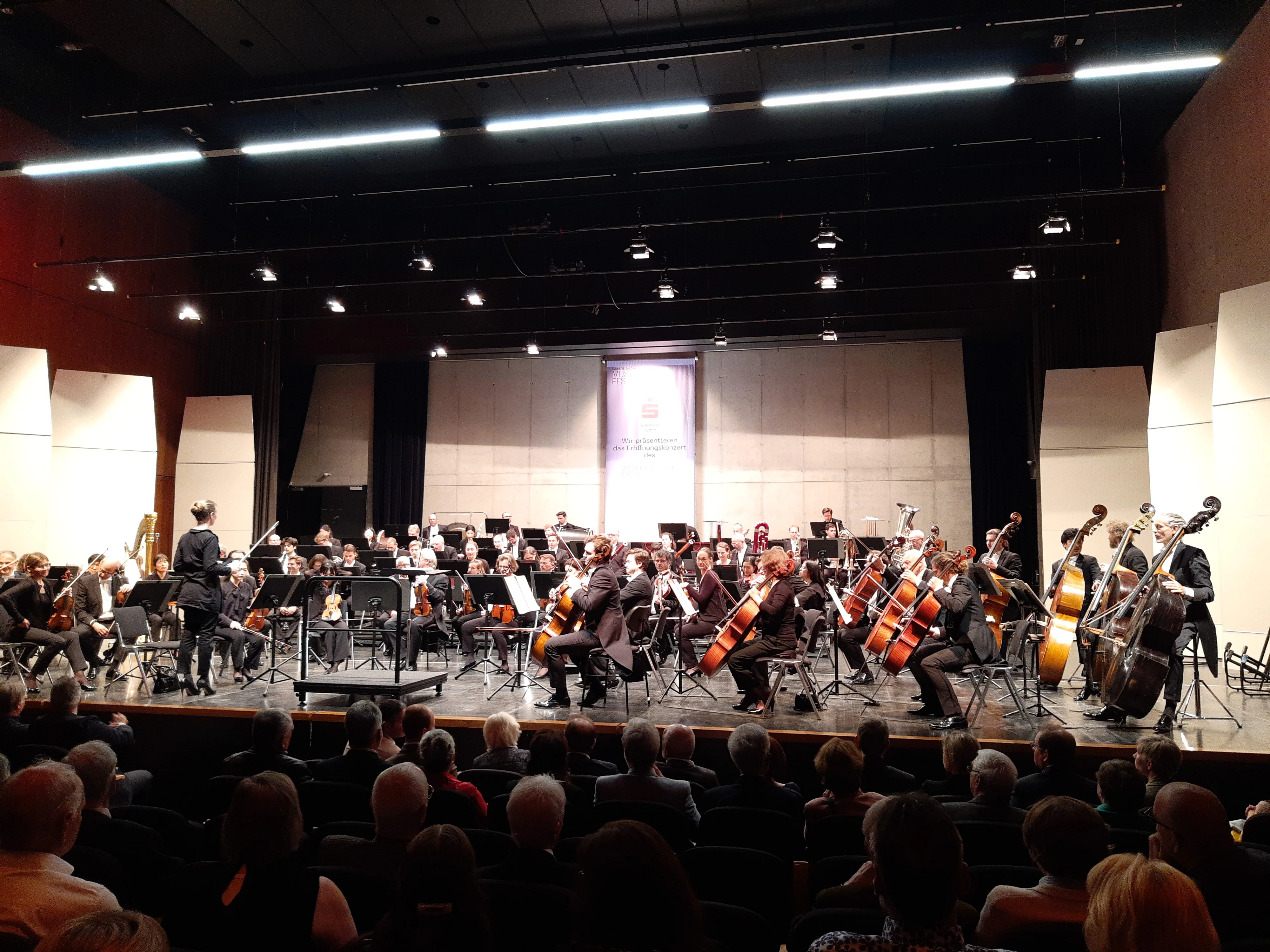
Image from Wikipedia
Image from Wikipedia
Northwest German Philharmonic – 75 Years of Sound Culture, Regional Identity, and International Impact
An Orchestra with History, Stance, and Distinct Profile
The Northwest German Philharmonic is one of the defining orchestras of North Rhine-Westphalia and is based in Herford, in the heart of East Westphalia. Since its founding, the orchestra has established itself as a cultural ambassador for an entire region, combining musical excellence with a strong public mission. What began as a regionally rooted ensemble has evolved into a professional symphony orchestra that is recognized in concert life well beyond its immediate area.
Those who listen to the Northwest German Philharmonic experience not only orchestral precision but also a musical culture founded on continuity, openness, and educational responsibility. The orchestra cherishes the great symphonic tradition as well as engaging with young listeners. This connection of stage presence, repertoire awareness, and societal relevance is what makes this ensemble captivating.
The Founding: A New Beginning After the War
The history of the Northwest German Philharmonic begins in 1946 in Bad Pyrmont, Lower Saxony. At that time, the orchestra was formed from musicians of the former Reichs-Bruckner-Orchester in Linz, the German Philharmonic in Prague, and other freelance musicians from the occupying zones. Clarinetist Franz Hammerla, cellist Richard Falb, and conductor Walter Stöver are considered the initiators and organizers.
In 1950, the ensemble merged with the Herford Symphony Orchestra and performed for the first time in Herford on October 10, 1950. This step marked the beginning of a new phase: the orchestra became firmly established in the East Westphalia-Lippe region and transformed from a rebuilding orchestra into a professional cultural carrier with a clear identity. The founding story continues to shape the Northwest German Philharmonic today as an example of musical renewal following historical upheavals.
Career Progression: From the Region to International Concert Halls
With around 130 concerts per year in Germany and Europe, the Northwest German Philharmonic occupies a special place in the musical life of North Rhine-Westphalia. The orchestra performs not only in concert halls between Minden, Paderborn, Gütersloh, and Detmold, but also makes guest appearances at renowned venues such as the Concertgebouw in Amsterdam, the Tonhalle Zurich, and the Great Festival Hall in Salzburg. Tours have also taken them to Denmark, Austria, the Netherlands, Italy, France, Spain, Poland, Japan, and the USA.
This international presence is more than mere touring activity. It demonstrates how consistently the Northwest German Philharmonic has positioned itself as an orchestra with a regional and international ambition. Particularly the years under Andris Nelsons provided the ensemble with new impulses and enhanced its artistic presence. Today, Jonathan Bloxham as the designated principal conductor continues to shape its profile and leads the orchestra into a new phase of its development.
Musical Development: Repertoire Maintenance and Present Day
The Northwest German Philharmonic is not an orchestra that limits itself to the glory of the canon. Instead, it connects the great symphonic masterpieces with contemporary compositions and targeted support for young soloists. A central element of this development has been the concert series "Podium Junger Solisten," established in 1972, which has launched numerous careers in Bad Salzuflen and provided important performance opportunities for prize winners of the German Music Competition.
Among the names supported there are Wolfram Christ, Isabelle Faust, Justus Frantz, Alban Gerhardt, Ulf Hölscher, Sabine and Wolfgang Meyer, Thomas Quasthoff, and Julian Steckel. This underscores the authoritative significance of the orchestra in the German music landscape. Anyone discussing musical development must also address the Northwest German Philharmonic's support for young talent, first encounters with the audience, and the sustainable shaping of careers.
Discography: A Documented Life of the Orchestra
The discography of the Northwest German Philharmonic is exceptionally extensive. The archive of the Westdeutscher Rundfunk contains around 800 music titles recorded by the orchestra. Additionally, there are over 200 vinyl and CD recordings, as well as a dedicated CD edition featuring live recordings from major international concert halls. These recordings document not only the repertoire but also the stylistic evolution of the orchestra over decades.
The recordings reflect the historical role of the ensemble as a reliable partner for radio, record production, and concert documentation. They preserve the sound of the Northwest German Philharmonic beyond the live experience and create a lasting repertoire archive. This discography offers an important means for classical music lovers and collectors to access an orchestra that has remained visible through recordings and radio presence.
Critical Reception and Cultural Significance
According to its own representation, the orchestra has earned an excellent reputation in the professional world and among the public and does not shy away from comparison with ensembles from German metropolitan areas. This classification fits its image: The Northwest German Philharmonic combines reliability, sound discipline, and a high level of repertoire competence. Its artistic role lies not only in the concert hall but also in the cultural representation of an entire region.
In addition, there is continuous educational work that is crucial for public perception. With concerts for children and youth, school visits by musicians, and rehearsal offers for classes, the orchestra annually reaches around 15,000 young listeners. This blend of artistic authority and educational responsibility makes the Northwest German Philharmonic an ensemble with societal depth.
Current Projects and Anniversary Season 2025/26
The latest projects showcase an orchestra that does not merely preserve tradition but actively translates it into the present. The anniversary season 2025/26 is marked by 75 years of the Northwest German Philharmonic and features an extensive program with more than 150 concerts. This includes festive concerts, new formats, school projects, and the publication of the magazine "intermezzo," which compiles the history of the orchestra, portraits of its members, and current initiatives.
For the anniversary, British composer Gavin Higgins has been commissioned to create a new composition. Additionally, events such as the festive concert to launch the anniversary season and the anniversary celebration broadcast by WDR highlight the significant public recognition of this phase. The Northwest German Philharmonic thus demonstrates how a state orchestra can remain representative, audience-friendly, and programmatically open in the 21st century.
Style, Sound, and Orchestral Identity
The style of the Northwest German Philharmonic is founded on symphonic clarity, precise articulation, and a broad understanding of repertoire. As a concert orchestra with 78 musicians, it embodies the great German orchestral tradition as well as international program ideas. Its artistic identity thrives on the balance of transparent orchestral culture, musical flexibility, and the aspiration to realize works from various epochs at the highest level.
Particularly exciting is the connection of classical core literature, contemporary works, and educationally communicated concert formats. The orchestra works not only for connoisseurs of the symphonic canon but also for new listener demographics. This creates a profile that combines musical expertise with cultural responsibility, giving the Northwest German Philharmonic a distinctive presence in the German orchestral market.
Conclusion: An Orchestra with a Future
The Northwest German Philharmonic represents artistic stability, regional roots, and international outreach. Its history speaks of reconstruction, its present of professionalism and openness, and its future of anniversaries, youth promotion, and new program diversity. Those searching for an orchestra that credibly brings together tradition, education, and concert culture will find a convincing ensemble here.
Especially live, the Northwest German Philharmonic unfolds its full impact: in the tension between symphonic force, musical detail, and direct presence in the hall. Anyone wishing to experience classical music with profile, history, and contemporary relevance should listen to this orchestra on stage. Attending a concert is worthwhile not only for classical fans but for anyone looking to discover great orchestral artistry as a vibrant cultural form.
Official Channels of Northwest German Philharmonic:
- Instagram: https://www.instagram.com/nordwestdeutsche_philharmonie/
- Facebook: https://www.facebook.com/NWDPhilharmonie
- YouTube: https://www.youtube.com/user/nwdphilharmonie
- Spotify: No official profile found
- TikTok: No official profile found
Sources:
- NWD-Philharmonie – The Northwest German Philharmonic
- NWD-Philharmonie – The History of NWD
- NWD-Philharmonie – intermezzo #75, The NWD Magazine
- NWD-Philharmonie – Homepage and Season Notes 2025/26
- NWD-Philharmonie – WDR 3 will broadcast the anniversary concert "75 Years NWD"
- miz.org – Northwest German Philharmonic
- Wikipedia – Northwest German Philharmonic