
Philipp Hübl
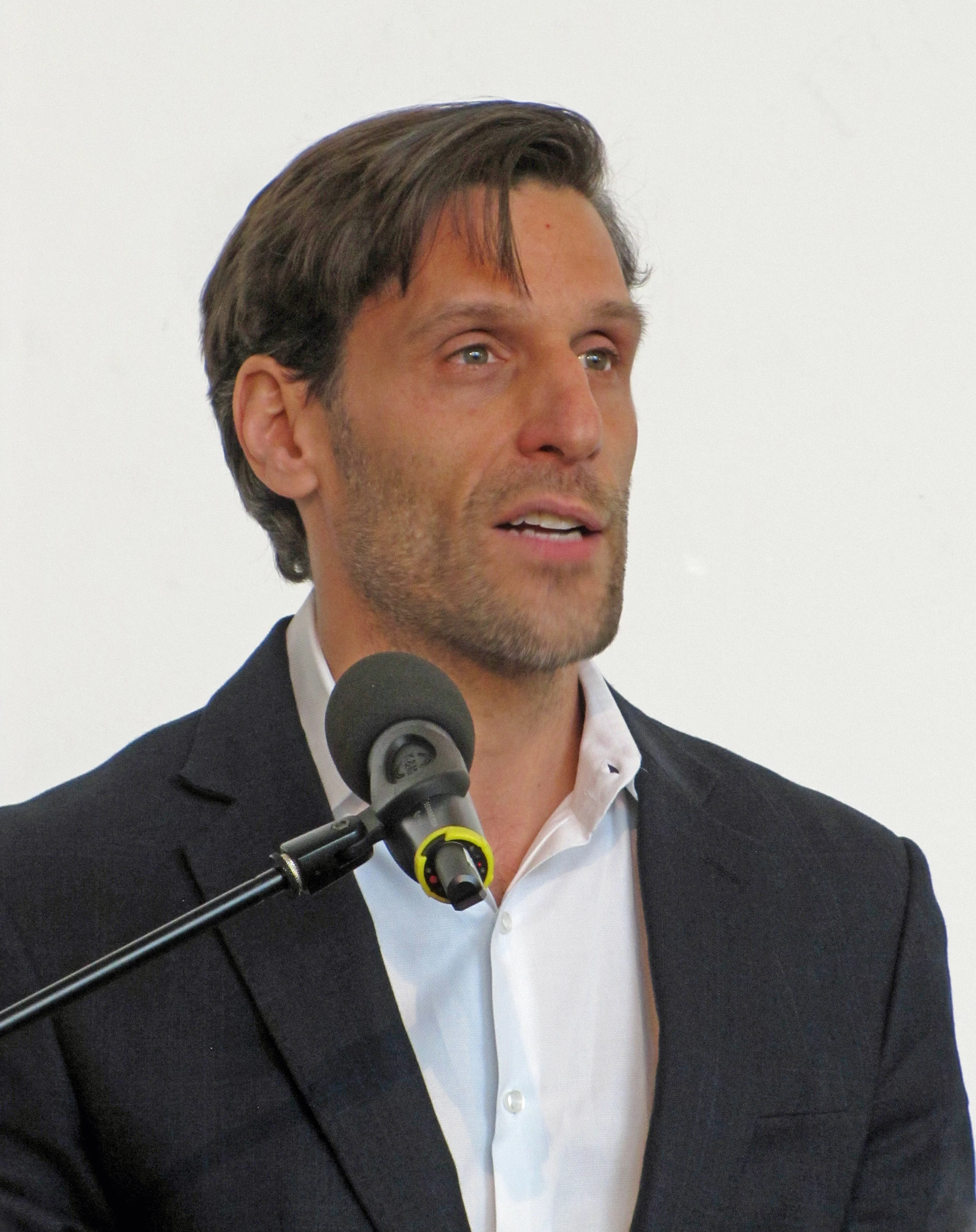
Image from Wikipedia
Image from Wikipedia
Philipp Hübl: The Philosopher Who Analyzes Morality, Media, and Contemporary Issues with Analytical Precision
An Intellectual Bridging Philosophy, Journalism, and Public Debate
Philipp Hübl, born on November 21, 1975, in Hannover, is one of the defining German voices at the intersection of philosophy, essay writing, and public debate. He works as a philosopher, author, and journalist, known for books that articulate complex questions about morality, truth, consciousness, and societal polarization in an understandable and pointed manner. His career merges academic research with a strong presence in media and cultural journalism, earning him a broad audience far beyond the university setting. ([de.wikipedia.org](https://de.wikipedia.org/wiki/Philipp_H%C3%BCbl?utm_source=openai))
What sets Hübl apart is the consistency with which he translates philosophical precision into public comprehensibility. His topics range from the philosophy of language and action theory to moral psychology, the philosophy of science, and questions about the digital public sphere. This creates his profile as a thinker who combines academic expertise with journalistic sharpness, systematically analyzing societal controversies rather than merely commenting on them. ([philipphuebl.com](https://philipphuebl.com/?utm_source=openai))
Biography and Academic Career
Hübl studied philosophy and linguistics in Berlin, Berkeley, New York, and Oxford. This international education shaped his intellectual perspective and sharpened his insights into different philosophical traditions as well as the culture of debate across various academic environments. He later taught at RWTH Aachen University, Humboldt University of Berlin, and from 2012 to 2018 as a junior professor of theoretical philosophy at the University of Stuttgart. ([srf.ch](https://www.srf.ch/kultur/gesellschaft-religion/philosoph-philipp-huebl-moral-ist-eine-allzweckwaffe?utm_source=openai))
His research focus includes the philosophy of mind, action theory, the theory of rationality, the philosophy of language, moral psychology, and the philosophy of science. This thematic breadth explains why Hübl presents so confidently in both academic publications and journalistic formats: he argues from the depth of specialized knowledge, but formulates with a view to a larger public. Additionally, he has served as a visiting professor and research fellow, including at the Berlin University of the Arts and the Weizenbaum Institute in Berlin. ([philipphuebl.com](https://philipphuebl.com/?utm_source=openai))
Breakthrough as an Author and Public Intellectual
Hübl gained wider recognition primarily through his books. His debut, “Follow the White Rabbit... into the World of Philosophy,” became a bestseller and established him as an author who presents fundamental philosophical questions in an elegant, entertaining, and accessible manner. Later titles such as “The Underground of Thinking,” “Bullshit Resistance,” “The Agitated Society,” and “Moral Spectacle” made him one of the most prominent voices in German nonfiction. ([philipphuebl.com](https://philipphuebl.com/?utm_source=openai))
His journalistic style is distinctly recognizable: Hübl works with sharp terms, precise definitions, and a didactic approach that does not simplify but organizes. In an era where debates are often dominated by buzzwords and moral shortcuts, his argumentative style serves as an alternative to rapid outrage. The strength of his texts lies in the combination of conceptual precision and societal relevance. ([zeit.de](https://www.zeit.de/2024/36/philipp-huebl-moralspektakel-statussymbol-bildung-philosophie?utm_source=openai))
Significant Works and Thematic Focus Areas
“The Underground of Thinking” deals with the unconscious, perception, and the degree to which our actions are genuinely determined by hidden processes. “Bullshit Resistance” focuses on fake news, conspiracy theories, and the necessity of critical thinking in digital public spheres. In “The Agitated Society,” Hübl analyzes the moral and emotional dynamics that amplify political polarization and cultural conflicts. ([deutschlandfunkkultur.de](https://www.deutschlandfunkkultur.de/philipp-huebl-der-untergrund-des-denkens-so-schwach-ist-das-100.html?utm_source=openai))
With “Moral Spectacle,” he continues along this line, examining how moral self-presentation on social media and in public discourse can become a status symbol. The volume was extensively discussed in interviews and contributions in 2024, clearly positioning itself in the current debate about attitudes, self-staging, and political communication. Hübl's books are, therefore, not merely collections of essays but precise interventions into the present. ([zeit.de](https://www.zeit.de/2024/36/philipp-huebl-moralspektakel-statussymbol-bildung-philosophie?utm_source=openai))
Teaching, Media Presence, and Intellectual Publicity
Hübl is not only an author but also a sought-after commentator in media, podcasts, television formats, and public discussion events. His official website documents numerous lectures, interviews, and media appearances, including formats on 3sat, SRF, Deutschlandfunk, and the Philosophy Magazine among other cultural journalism platforms. This presence shows how strongly he is redefining the role of the philosopher as a public educator. ([philipphuebl.com](https://philipphuebl.com/?utm_source=openai))
His teaching also plays a part in this impact. Hübl conveys philosophical thinking not as elite specialized knowledge but as a tool for judgment, critical thinking, and intellectual self-defense. In times of misinformation, groupthink, and moral overheating, this approach develops a particular authority as it relies not on volume but on conceptual work and argumentative discipline. ([philipphuebl.com](https://philipphuebl.com/?utm_source=openai))
Style, Method, and Intellectual Signature
Hübl's style is analytical, clear, and simultaneously approachable. He combines academic jargon with an essayistic elegance that makes his books accessible to a wide readership. Notably, his ability to connect abstract philosophical questions with examples from everyday life, media culture, and political communication creates a rare blend of theory and relevance to contemporary issues. ([philipphuebl.com](https://philipphuebl.com/?utm_source=openai))
His arguments often revolve around the tension between individual self-perception and societal expectation. He is interested in how morality, identity, and public recognition are interconnected, how people respond to uncertainty, and why debates quickly turn into symbolic battles. These topics are not only philosophically relevant but also explain part of his popularity: Hübl speaks about the present without falling into its traps. ([zeit.de](https://www.zeit.de/2024/36/philipp-huebl-moralspektakel-statussymbol-bildung-philosophie?utm_source=openai))
Cultural Relevance and Critical Reception
In critical reception, Hübl is primarily seen as a precise diagnostician of societal conditions. Media such as ZEIT, Deutschlandfunk, SRF, and the Philosophy Magazine regularly engage with his theses because they resonate with current debates: from digital outrage to moral self-staging to questions about truth and rationality in a fragmented public sphere. His books thus serve as navigational aids in a culture of discourse that is rife with uncertainty. ([zeit.de](https://www.zeit.de/2024/36/philipp-huebl-moralspektakel-statussymbol-bildung-philosophie?utm_source=openai))
His awards underline this position. According to his official website, he has received the Mindelheim Philosophy Prize, the Madsack Award, and the Tractatus Prize of the Philosophicum Lech for his books. Such honors are a signal that his work is not only publicly visible but also recognized in scholarly and journalistic circles. ([philipphuebl.com](https://philipphuebl.com/?utm_source=openai))
Current Projects and Recent Publications
Among his recent activities is the publication and public discussion of “Moral Spectacle” in 2024. His website features several current dates, interviews, and discussions, including conversations in ZEIT, on 3sat Kulturzeit, and in international media such as El Mundo. This demonstrates that Hübl continues to engage actively with the significant questions of the present, continuously placing his theses in new contexts. ([philipphuebl.com](https://philipphuebl.com/?utm_source=openai))
He also remains present in articles and essays, contributing pieces on concepts such as freedom, moral purity, discussion culture, or truth. This continuously expands his work with journalistic comments that sharpen rather than dilute his philosophical profile. His current work stays true to the core of his intellectuality: thinking precisely, formulating clearly, and impacting the public sphere. ([philipphuebl.com](https://philipphuebl.com/?utm_source=openai))
Conclusion: Why Philipp Hübl Remains Relevant
Philipp Hübl is compelling because he does not treat philosophy as a closed discipline but as a living practice for analyzing the present. His books and essays demonstrate how closely intertwined morality, media, language, and political culture are. Those seeking to understand why public debates escalate, how people stage themselves, and why critical thinking is often put under pressure will find in Hübl a precise and articulate observer. ([philipphuebl.com](https://philipphuebl.com/?utm_source=openai))
Particularly in a time when attention is fleeting and discourses are fiercely contested, reading his works is especially worthwhile. Hübl does not provide quick slogans but intellectual tools. Engaging with him in conversations, lectures, or discussions reveals an author who combines intellectual clarity with public significance, making him one of the most important German-speaking voices of his generation. ([philipphuebl.com](https://philipphuebl.com/?utm_source=openai))
Official Channels of Philipp Hübl:
- Instagram: No official profile found
- Facebook: No official profile found
- YouTube: No official profile found
- Spotify: No official profile found
- TikTok: No official profile found
Sources:
- Philipp Huebl - Official Website
- Wikipedia - Philipp Hübl
- DIE ZEIT - Philipp Hübl: The Educated Tend to Consider Themselves Morally Superior
- SRF Kultur - Philosopher Philipp Hübl: Morality is a Universal Tool
- Deutschland.de - Philosopher Philipp Hübl: Why We Are Susceptible to Bullshit
- Deutschlandfunk Kultur - Philipp Hübl: The Underground of Thinking
- Philosophie Magazin - Philipp Hübl: Too Much Attention Blinds!
- PhilPublica - Interview with Philipp Hübl
- Wikipedia: Image and Text Source