
Vincent Macaigne
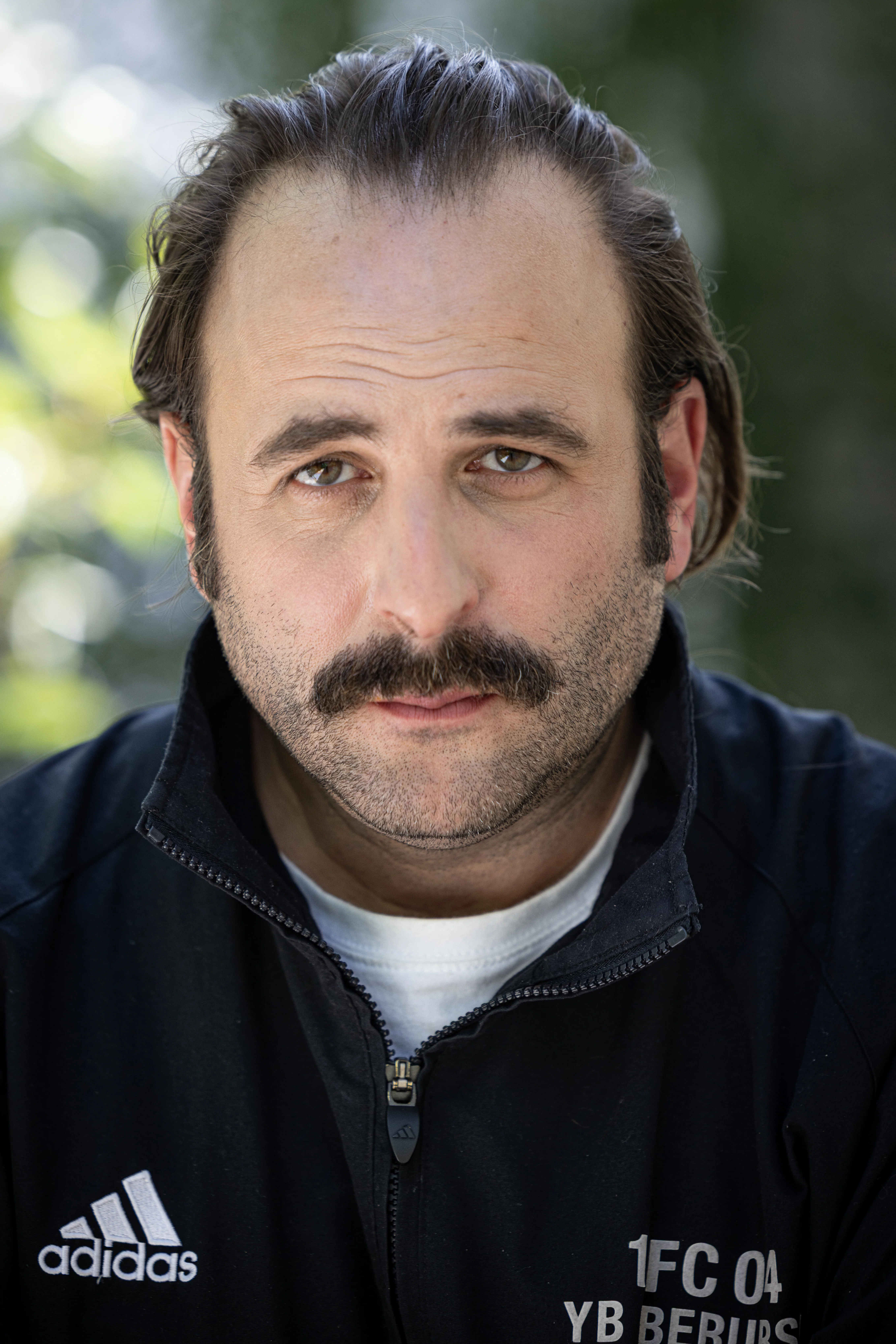
Image from Wikipedia
Image from Wikipedia
Vincent Macaigne: The Radical Poet of French Contemporary Theater and Cinema
An Artist Between Stage, Camera, and Literary Explosion
Vincent Macaigne is one of the most distinctive French artists of his generation. Born on October 19, 1978, in Paris, he has developed into an actor, theater maker, director, and playwright, whose work oscillates between psychological intensity, linguistic force, and physical presence. His career is marked by an early interest in the stage, a solid education at the Conservatoire National Supérieur d’Art Dramatique de Paris, and a consistently idiosyncratic approach to acting and directing. ([de.wikipedia.org](https://de.wikipedia.org/wiki/Vincent_Macaigne?utm_source=openai))
From an early age, Macaigne sought not smooth expression but friction. His artistic development represents a theater and cinema that exposes conflicts, sharpens emotions, and deliberately blurs the boundaries between tragedy, satire, and political reflection. It is precisely this tension that makes him an unmistakable figure in French cultural life. ([colline.fr](https://www.colline.fr/en/node/2225?utm_source=openai))
Biographical Roots and Education
Vincent Macaigne discovered theater while still in high school and deepened his interest at the renowned Paris Conservatory, which he joined in 1999. There, he worked with Joël Jouanneau, Catherine Marnas, Claude Buchwald, and Muriel Mayette, among others. This education laid the foundation for a career characterized by both intellectual discipline and expressive unrest. ([viennale.at](https://www.viennale.at/de/gast/vincent-macaigne?utm_source=openai))
His family roots connect French and Iranian influences: he is described in biographical details as the son of a French father and an Iranian mother who worked as a painter. This heritage is reflected less in direct thematic choices than in the open, cross-cultural sensitivity of his artistic perspective. ([fr.wikipedia.org](https://fr.wikipedia.org/wiki/Vincent_Macaigne?utm_source=openai))
The Path Through Theater: Direction as an Artistic Battleground
Macaigne's work in theater began not as a mere complement to acting but as an independent artistic domain. In 2004, he directed Sarah Kane's Greed at the Jeune Théâtre National, followed by works that distinguished him as a radical and formally resolute director. This was particularly evident in his adaptation of Hamlet, Au moins j’aurai laissé un beau cadavre, which was presented at the Festival d'Avignon in 2011. ([viennale.at](https://www.viennale.at/de/gast/vincent-macaigne?utm_source=openai))
His theater is explicitly described by institutions like La Colline as an “experience,” a cry full of contradiction and romantic energy. This assessment gets to the heart of his stage aesthetics: Macaigne works with overwhelm, eruptive language, and intense performances that do not calm the audience but challenge them. In this lies his authority as a theater artist. ([colline.fr](https://www.colline.fr/en/node/2225?utm_source=openai))
Breakthrough in Cinema and Rise in the French Film Scene
Macaigne's breakthrough in cinema came in 2013 with three films showcased at the Festival de Cannes: 2 Automnes 3 Hivers, La Fille du 14 juillet, and La Bataille de Solférino. This phase made him known to a broader audience and established him as an actor portraying nervous, vulnerable, and highly present characters. ([de.wikipedia.org](https://de.wikipedia.org/wiki/Vincent_Macaigne?utm_source=openai))
Since then, he has worked with several prominent directors in French cinema, including Bertrand Bonello, Guillaume Brac, Justine Triet, Antonin Peretjatko, Anne Fontaine, and Dominik Moll. The selection of these names illustrates the artistic breadth of his work: Macaigne prefers to engage in films that blend psychological nuance, formal unrest, and contemporary relevance. ([allocine.fr](https://www.allocine.fr/personne/fichepersonne-180052/filmographie/?utm_source=openai))
Between Acting and Directing: A Multifaceted Profile
Vincent Macaigne is not only an interpreter but also the author of his own artistic world. Alongside acting, he devotes himself to writing and directing, which distinctly sets his profile apart from classical acting careers. This dual perspective shapes his approach to roles: he thinks about characters not only from within but always in relation to a larger dramaturgy. ([medias.unifrance.org](https://medias.unifrance.org/medias/67/171/305987/presse/la-venue-de-l-avenir-dossier-de-presse-anglais.pdf?utm_source=openai))
His presence on international platforms and festival programs underscores this versatility. At Cannes 2025, for instance, he is listed as an actor in La Venue de l’avenir, a film by Cédric Klapisch that was shown out of competition. At the same time, productions like Hors du temps by Olivier Assayas and En même temps illustrate that Macaigne remains firmly rooted in French auteur cinema. ([festival-cannes.com](https://www.festival-cannes.com/en/p/vincent-macaigne-3/?utm_source=openai))
Current Projects and New Works
A notable recent project is La Venue de l’avenir, which was screened out of competition at the 2025 Cannes International Film Festival. The festival materials list Macaigne as the actor portraying the character Guy, while press releases and festival programs highlight the film as a significant new feature. Thus, Macaigne remains present and visible in the current cinematic landscape. ([festival-cannes.com](https://www.festival-cannes.com/f/la-venue-de-l-avenir/?utm_source=openai))
He also makes an impact in theater: Avant la terreur, freely inspired by Shakespeare and other texts, was shown at several important venues in 2023 and 2024. This work connects to Macaigne's long-standing engagement with Shakespeare and confirms his reputation as a director who does not treat classics in a museum-like manner but transforms them into a torn present. ([colline.fr](https://www.colline.fr/en/node/2225?utm_source=openai))
Style, Language, and Stage Presence
Macaigne's style thrives on extremes. On stage and in front of the camera, he combines a fragile physicality with eruptive energy, often accompanied by a linguistic rhythm that oscillates between melancholy and aggression. This mix lends his characters a rare immediacy and explains why critics perceive him as one of the most compelling artists of his generation. ([allocine.fr](https://www.allocine.fr/personne/fichepersonne-180052/biographie/?utm_source=openai))
His theater does not serve as a decorative illustration but as a moral and emotional trial. The adaptations of Shakespeare, his own directorial work, and the choice of recurring themes such as power, love, decay, and revolt reveal a clear artistic signature. In this sense, Macaigne possesses an authority that arises from consistent aesthetic radicalism. ([theatres.lu](https://theatres.lu/sites/default/files/2025-04/brochure-2324-low-single.pdf?utm_source=openai))
Reception, Significance, and Cultural Influence
The French press has described Macaigne multiple times as an outstanding figure in theater, while film festivals and cultural institutions have repeatedly spotlighted his works. His presence at Cannes, Avignon, and major theaters such as La Colline or the Ménagerie de Verre shows that his name embodies a particular form of artistic urgency. This is not a superficial fame but a recognition for substantive and formal consistency. ([de.wikipedia.org](https://de.wikipedia.org/wiki/Vincent_Macaigne?utm_source=openai))
Culturally, Macaigne embodies that rare connection between acting, directing, and dramatic thought, which is particularly valuable in contemporary European theater and auteur cinema. His works are not mere character portrayals but confrontations with language, power, and vulnerability. It is precisely therein that his lasting influence lies. ([medias.unifrance.org](https://medias.unifrance.org/medias/67/171/305987/presse/la-venue-de-l-avenir-dossier-de-presse-anglais.pdf?utm_source=openai))
Discography and Musical Classification
A classical musical discography for Vincent Macaigne does not exist, as he is primarily known as a film and theater actor as well as a director. Rather than being defined by albums, singles, or charts, his work is characterized by filmography, stage works, and literary-dramatic productions. For an SEO-optimized artist page, the precise classification of his film and theatrical career remains more important than a fabricated musical biography. ([de.wikipedia.org](https://de.wikipedia.org/wiki/Vincent_Macaigne?utm_source=openai))
This clarity enhances the credibility of his profile: Vincent Macaigne is not a musician in the strict sense but an extraordinarily productive French stage and film artist. His artistic development shows how strongly theater and cinema can mutually enrich each other when an actor not only plays roles but understands them as part of a larger aesthetic system. ([viennale.at](https://www.viennale.at/de/gast/vincent-macaigne?utm_source=openai))
Conclusion: Why Vincent Macaigne Remains So Engaging
Vincent Macaigne fascinates because he can never be reduced to a simple interpretation. He is an actor, director, playwright, and boundary crosser between stage and screen, an artist who intertwines emotion, intellect, and formal risks. For those who love French contemporary theater and demanding auteur cinema, this is an unmistakable voice. ([medias.unifrance.org](https://medias.unifrance.org/medias/67/171/305987/presse/la-venue-de-l-avenir-dossier-de-presse-anglais.pdf?utm_source=openai))
Macaigne remains intriguing primarily because he understands art as a living, risky experience. His work deserves immediate engagement in the theater and careful observation in cinema—best experienced where his intensity is most palpable: live, in the space, without distance. ([theatres.lu](https://theatres.lu/sites/default/files/2025-04/brochure-2324-low-single.pdf?utm_source=openai))
Official Channels of Vincent Macaigne:
- Instagram: No official profile found
- Facebook: No official profile found
- YouTube: No official profile found
- Spotify: No official profile found
- TikTok: No official profile found
Sources:
- Wikipedia – Vincent Macaigne
- Viennale – Vincent Macaigne
- Festival du Cinéma Américain de Deauville – Vincent Macaigne
- Festival de Cannes – Vincent Macaigne
- Unifrance – Press Kit for La Venue de l’avenir
- La Colline – Avant la terreur
- L’Officiel des spectacles – Vincent Macaigne
- Wikipedia: Image and text source
Upcoming Events
Breakfast with Audrey
Breakfast at Audrey's
Breakfast at Audrey's